Slab Leak Detection in Fort Myers, FL
A slab leak is a leak in a water pipe under your home’s concrete slab, and most Fort Myers homes sit on one. Slab leak detection pinpoints the location before any concrete is broken, so repairs stay small and focused.
Call and describe what you’re seeing (the warm spot, the bill, the sound) and you’ll be connected with a local Fort Myers pro. If it’s a wall or fixture instead, see how a slab leak differs from a plumbing leak.
- 24/7 availability
- Detection and repair
- Local Fort Myers pros
What is slab leak detection?
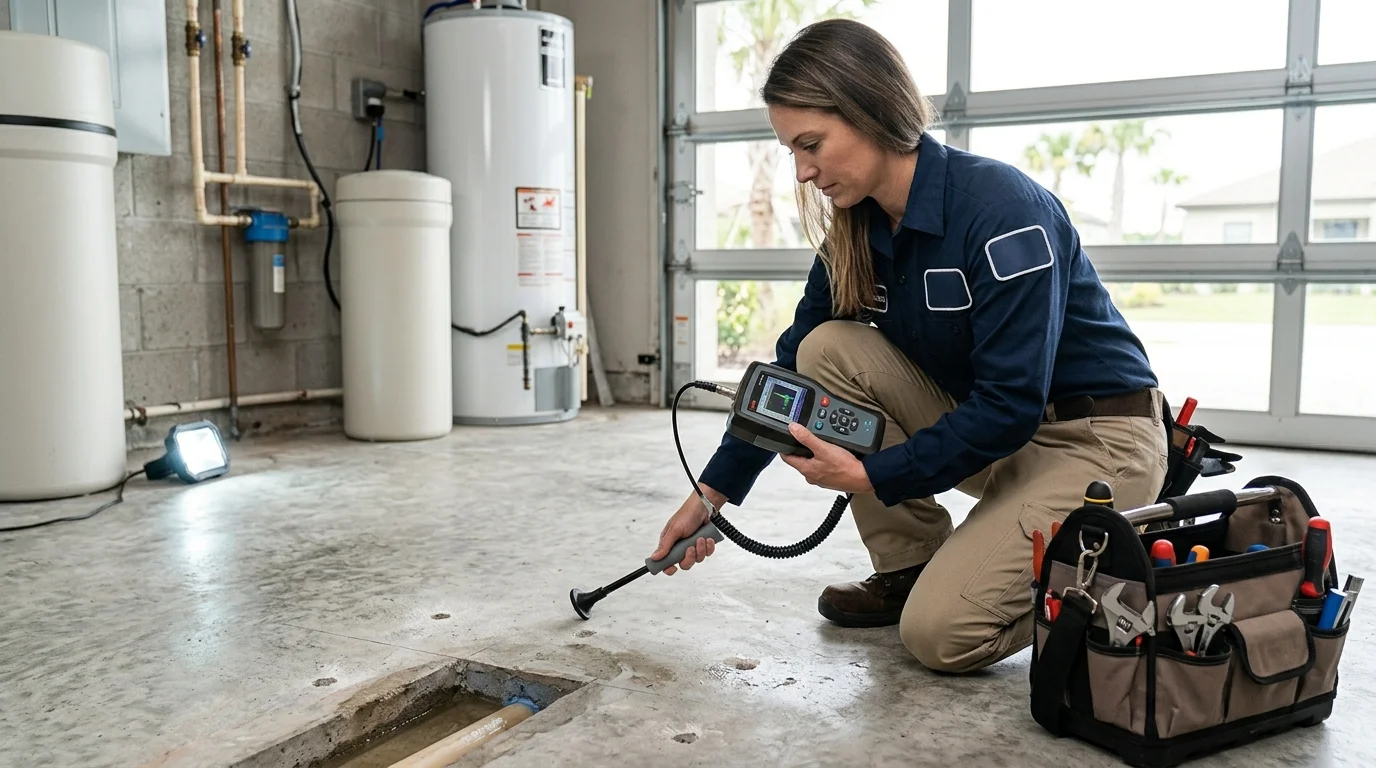
A slab leak is a leak in a water pipe under or inside your home’s concrete foundation. Detection uses non-invasive tools: acoustic listening, thermal imaging, and pressure testing to pinpoint the exact location, keeping repairs focused and protecting flooring. Fort Myers Leak Pros connects you with local Fort Myers providers.
| What you notice | Likely location | Start here |
|---|---|---|
| Warm spot on the floor | Hot water line under the slab | Slab leak check |
| Water bill jumped, no visible leak | Supply line under the slab | Meter test, then detection |
| Running water sound, all taps off | Pressurized line leaking | Acoustic listening |
How do I know if I have a slab leak?
Water travels along pipes and through concrete, so the wet spot is rarely above the leak. If two or more of these show up together, get a slab leak check.
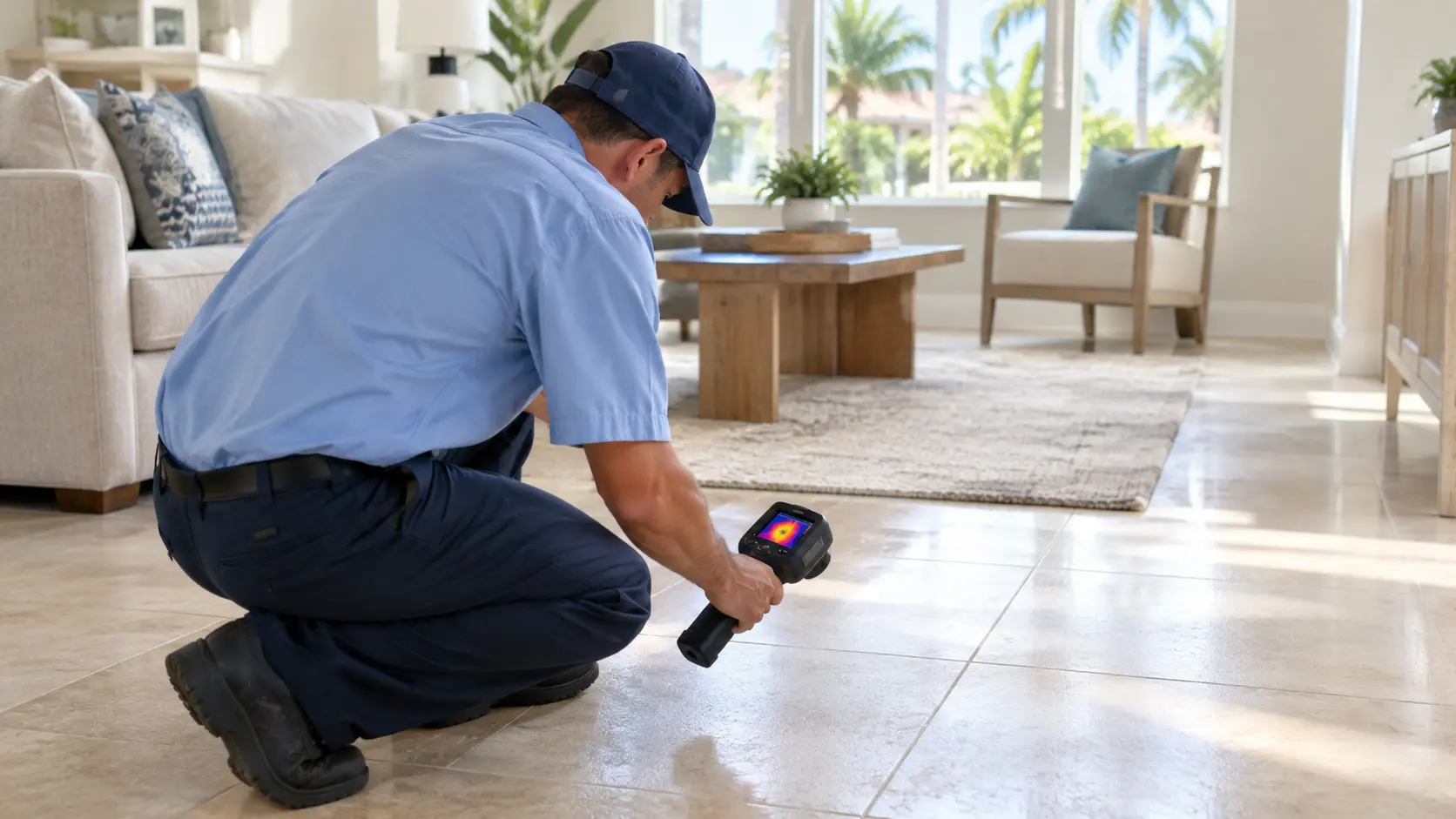
- A warm spot on the floor, especially on tile
- A water bill that climbs with no change in use
- The sound of running water when every tap is off
- Damp carpet, buckling tile, or warped flooring
- Cracks in walls or flooring that appear suddenly
- Low water pressure in one part of the house
- A musty smell near the floor with no visible cause
- Your water meter moves when all water is off
A warm spot on the floor is the classic slab leak sign. Damp spots inside walls fall under hidden water leak detection.
What happens during slab leak detection?
-
Describe what you’re seeing
Call and describe the symptoms (the warm spot, the bill, the sound) so the local provider can plan the right tests.
-
The leak is located, not guessed at
Acoustic listening picks up the hiss of escaping water, thermal imaging shows heat patterns from a hot line, and pressure testing confirms the losing line. Together they mark the spot within inches.
-
You review the repair options
Once located, the provider explains the fix (spot repair through the slab or rerouting the line) and confirms the plan in writing before work begins.
New to this? See how leak detection works, plus the water leak detection overview.
What causes slab leaks in Fort Myers homes?
Most Fort Myers homes are slab-on-grade, with water lines buried in concrete decades ago and the predictable pipe problems older Fort Myers homes develop. Four local factors do most of the damage:
Pipe corrosion
Hard, mineral-heavy water wears copper from the inside. Older galvanized and cast-iron pipe corrode faster once their coating is gone.
Soil and slab movement
Sandy soil shifts with heavy rain and hurricane-season saturation, stressing pipes where they enter the slab.
Abrasion over time
Pipes expand and contract with hot water. Where a line rubs concrete or rebar for years, the wall thins and fails, common in 1970s–1990s builds.
High water pressure
Pressure above 80 psi strains joints and weak spots. Many Fort Myers homes have never had the regulator checked.
How can I test for a slab leak myself?
Try the free 30-minute meter test to settle whether water is leaving your system.
- Turn off every tap, appliance, and the irrigation.
- Note the meter reading, usually in a box near the street.
- Wait 30–60 minutes, using no water.
- Check again. A moved meter means water is escaping, so a slab leak is a strong suspect.
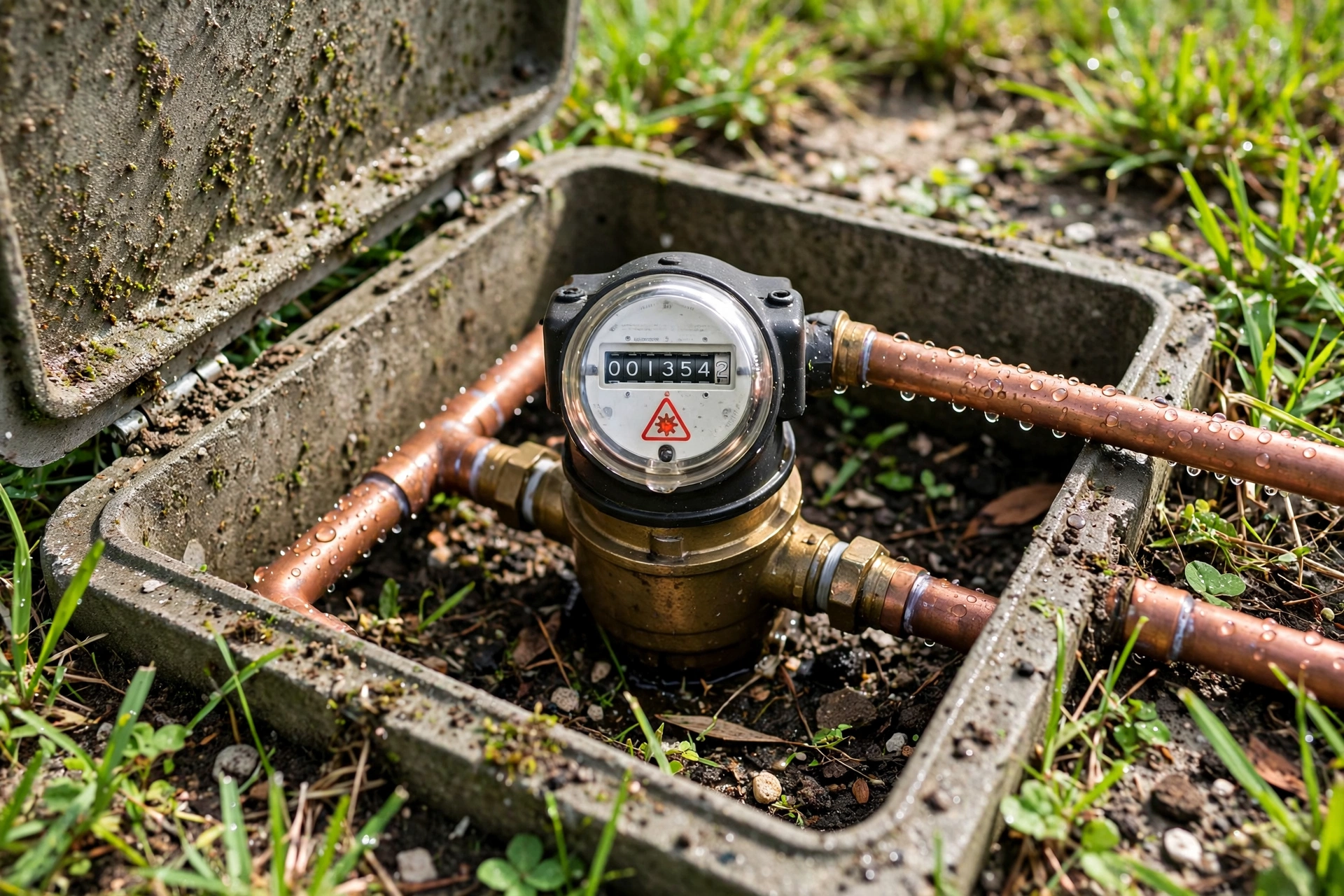
Stop and call if the meter spins fast, you see pooling water, or a floor area feels hot. A fast leak does real damage in hours. Meter moves but floors feel fine? The leak may be in the yard line: see underground leak detection.
Slab leak detection FAQs
How do I know if I have a slab leak?
Watch for a warm spot on the floor, a climbing water bill, running-water sounds with taps off, and damp or buckling flooring. Two or more together is a strong signal. If the 30-minute meter test shows the meter moving with all water off, a slab leak is a likely cause.
How is a slab leak found without breaking up my floor?
Providers use non-invasive methods: acoustic listening picks up the hiss of escaping water, thermal imaging shows heat from a hot line, and pressure testing isolates the losing line. Together they mark the leak within inches. Fort Myers Leak Pros connects Fort Myers homeowners with independent local leak detection providers.
How long does slab leak detection take?
Most appointments take one to two hours, depending on the size of the home and how many lines need testing. Acoustic listening and thermal imaging give answers on the spot in most cases; a pressure test that needs to run longer can add time. You get the located spot and the recommended next steps before the provider leaves.
Will my homeowners insurance cover a slab leak?
It depends on your policy. Many Florida policies cover resulting water damage (flooring, drywall, and the drying work) but not the pipe repair, often classed as wear and tear. Detection coverage varies. Document everything with photos, keep the provider’s report, and call your insurer before authorizing major work.
Should I turn off my water if I suspect a slab leak?
If the meter spins fast, a floor area feels hot, or water is visibly pooling, shut off the main valve right away (usually near the meter or where the line enters the house) and call. For a slow suspected leak, leave water on for the meter test, but don’t wait days. Water under a slab keeps spreading and undermines flooring and foundations.
Last updated: October 2026
A small leak under the slab never stays small.
Water keeps moving and damage keeps spreading. Describe what you’re seeing. We’ll connect you with a local Fort Myers pro today.