Slab Leak vs Plumbing Leak: Who Should You Call First?
Slab leak vs plumbing leak: the difference comes down to where the water is escaping, and that decides who you should call first. Here is how to tell them apart and what to do next.
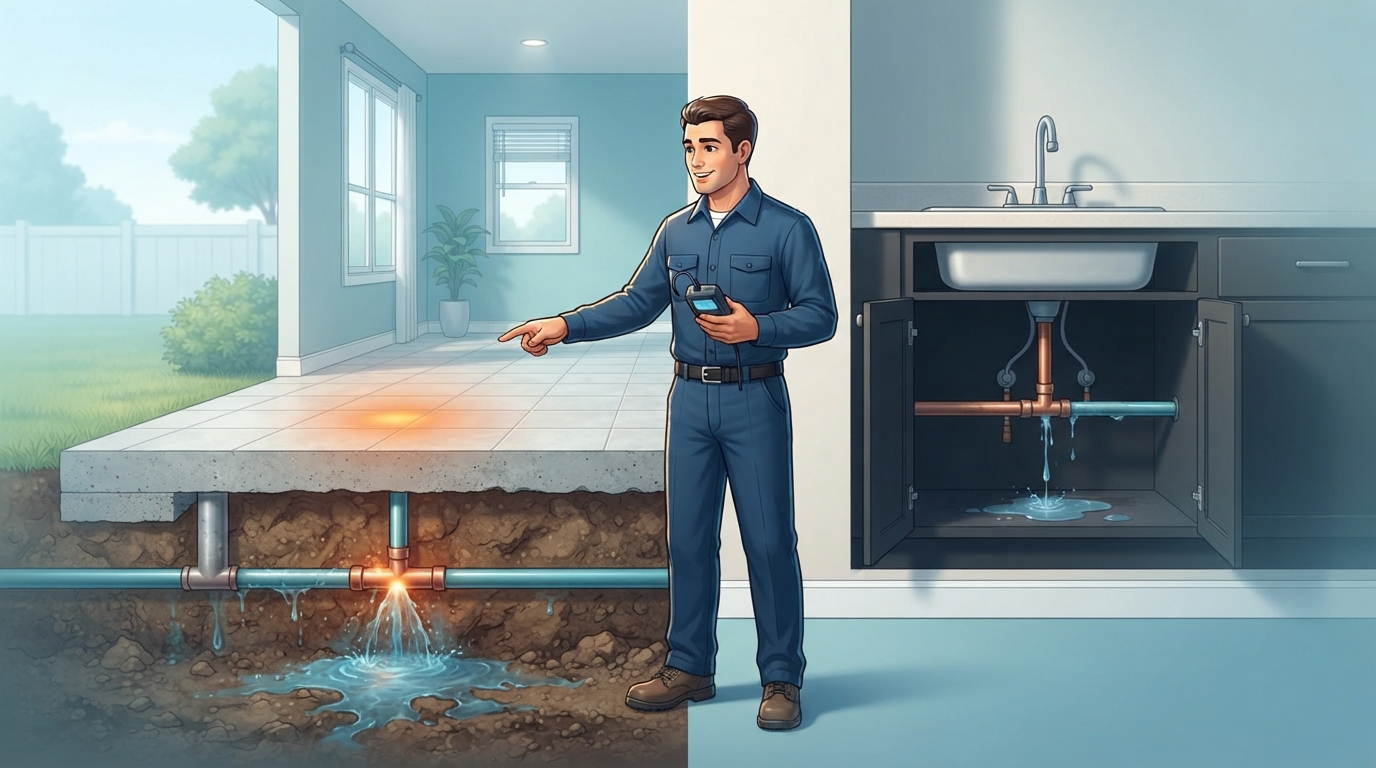
If your water bill jumped or you can hear water running when everything is off, you want an answer fast. In Fort Myers, where many homes are built on a concrete slab, a leak could be in an easy-to-reach pipe or buried beneath your floor. Knowing which is more likely helps you call the right person the first time.
What is the difference between a slab leak and a plumbing leak?
A slab leak is a leak in a water line that runs inside or underneath the concrete foundation of your home. A plumbing leak is the broader term for a leak anywhere in your pipes, fittings, or fixtures, such as under a sink, behind a wall, or in the attic. Technically, a slab leak is a type of plumbing leak. The practical difference is location: one is usually easy to see and reach, and the other is hidden and needs special equipment to pinpoint.
Common signs of a slab leak
Because the pipe is buried, the clues are indirect:
- A water meter that keeps moving when every fixture is off
- A warm or hot spot on the floor
- The sound of running water when nothing is in use
- Damp carpet, lifting flooring, or wet baseboards
- A musty smell with no obvious source
- A water bill that rises without a change in how you use water
Common signs of a plumbing leak
These leaks often show themselves in one specific place: a drip under a sink, moisture around the base of a toilet, a stain spreading on a ceiling or wall, or low water pressure at a single fixture. Dampness near the water heater or a toilet that keeps refilling on its own are also common clues.
A simple water meter test
This quick check can confirm that water is escaping somewhere, even if you cannot see it:
- Turn off all water use in the house, including the ice maker, dishwasher, washing machine, and irrigation system.
- Find your water meter and note the reading, or look at the small leak indicator on the meter if it has one.
- Wait 30 to 60 minutes without using any water.
- Check the meter again. If the reading changed or the indicator is still spinning, water is leaking somewhere between the meter and your fixtures.
This test tells you a leak exists. It does not tell you whether it is a slab leak or a plumbing leak, so treat it as a reason to investigate, not a diagnosis.
Who should you call first?
Your next step depends on what you can see.
If the source is visible and reachable, such as a dripping supply line or a leaking toilet connection, a plumbing leak is the likely cause, and a plumber can usually handle it directly.
If the meter is moving but nothing is visible, or you notice a warm floor spot, damp flooring, or the sound of water, start with slab leak detection. Pinpointing the exact location first means any repair can be targeted, instead of guessing and opening up more floor or wall than necessary.
If water is actively flooding, shut off the main water valve first, then call an emergency plumber.
It is also smart to contact your insurance company early. Coverage varies by policy, and some insurers want documentation of the leak, so ask what they require and keep any inspection report.
What to tell the provider when you call
Share where you first noticed the symptom, when it started, and what your meter test showed. Mention any recent plumbing work and have a recent water bill handy for comparison. Photos of damp spots or stains help too. For more on what to expect, see how leak detection works and our guide to the signs of a hidden water leak.
Frequently asked questions
Is a slab leak an emergency?
Not always, but water keeps escaping and moisture damage can keep growing. If you see flooding or hear water rushing, shut off the main valve and arrange an inspection as soon as possible.
Can I tell the difference myself?
Clues like a warm floor spot, a moving meter, or a visible drip can point you in a direction, but pinpointing the exact location usually takes testing equipment.
Can a plumber find a slab leak?
Some can, and others work with leak detection specialists. Ask whether they use non-invasive locating equipment before any floor is opened.
Does homeowners insurance cover leak detection?
It depends on your policy. Contact your insurer to confirm what is covered.