Commercial Leak Detection in Fort Myers, FL
A leak in a commercial building means more than wasted water: closed restrooms, health-code risk in food service, tenant complaints, and utility bills that climb across a large property. Finding it fast, with minimal disruption to your business, is the whole job.
Commercial leak detection covers offices, restaurants, retail, warehouses, and multi-unit properties, using acoustic listening, thermal imaging, and line locating to pinpoint the source while your business keeps running. Call, describe the property, and you'll be connected with a local Fort Myers pro. Homeowners start with water leak detection instead.
- 24/7 availability
- Minimal disruption
- Local Fort Myers pros
What is commercial leak detection?
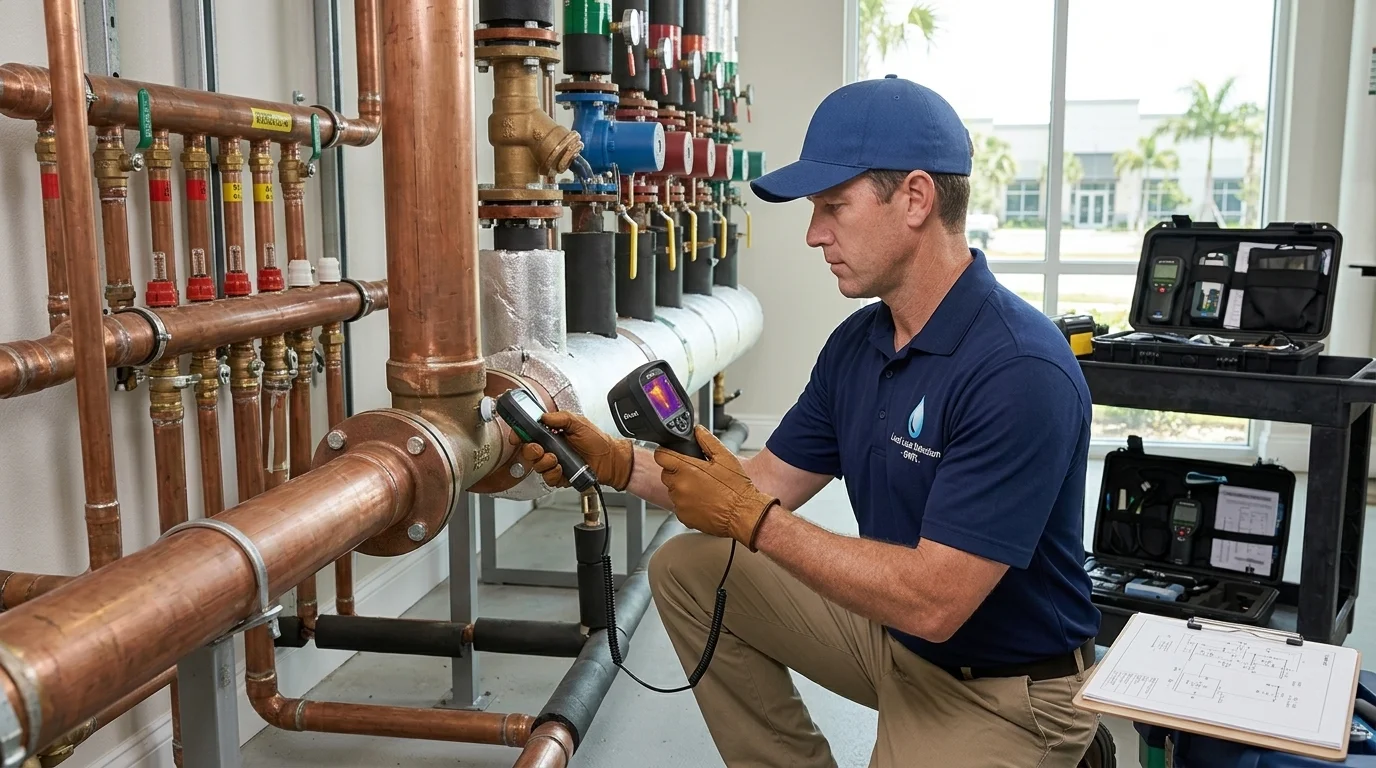
Commercial leak detection finds water leaks in business properties: offices, restaurants, retail, warehouses, and multi-unit buildings. It uses acoustic listening, thermal imaging, and line locating to pinpoint the source with minimal disruption to operations, and findings come with written documentation for your records. Fort Myers Leak Pros connects Fort Myers businesses with independent local leak detection providers.
| What you notice | Likely source | Start here |
|---|---|---|
| Utility bill climbing with no explanation | Running fixtures or buried line | Meter and fixture audit |
| Restroom fixtures running constantly | Failed valves or flappers | Restroom sweep |
| Damp ceiling tiles or wall stains | Pipe in ceiling or wall cavity | Thermal scan |
| Soggy landscaping or pooling near the building | Irrigation or service line | Line locating |
How do I know if my commercial building has a leak?
Commercial leaks hide in large systems. These are the signs property managers and business owners report most:
- A water or utility bill climbing with no change in usage
- Restroom toilets or urinals running constantly
- Damp ceiling tiles or stains on walls
- A musty odor in storage rooms or back hallways
- Water pooling near the foundation or in landscaping
- Tenant or staff complaints about dampness or odors
- Irrigation zones that stay soggy between cycles
- Dampness around water heaters or boiler equipment
Restaurants and retail spaces have their own leak patterns: read leak detection for restaurants and retail in Fort Myers. If the soggy ground sits out in the parking lot or landscape, see underground leak detection.
What happens during commercial leak detection?
-
Describe the property
Call and describe the building: the type of business, the symptoms, and your operating hours. The local provider plans the visit around your business so detection causes minimal disruption.
-
Systems are tested methodically
Restrooms, kitchens, utility rooms, and irrigation zones are checked in turn. Acoustic listening finds pressurized line leaks, thermal imaging traces hot-water and ceiling leaks, and line locating maps buried supply lines. Each suspect area is confirmed or ruled out.
-
You get documented findings
Once the source is pinpointed, you receive written documentation of the findings with the marked location, plus the repair options, for your maintenance records or insurance file.
New to this? See how leak detection works, start to finish.
What causes leaks in Fort Myers commercial buildings?
Commercial plumbing works harder than residential, and Fort Myers conditions punish deferred maintenance. Four culprits cause the majority:
Heavy-use restroom fixtures
Commercial toilets, urinals, and faucets cycle hundreds of times daily. Valves, flappers, and seals wear out far faster than in a home, and a stuck valve can waste water around the clock.
Aging building plumbing
Older retail strips and office buildings run on galvanized or copper lines that corrode with age, especially in damp soil and hard water. Multi-tenant buildings multiply the number of joints that can fail.
Kitchen and heat stress
Restaurant kitchens combine heat, grease, and constant water use, which stresses supply lines, dishwasher connections, and floor drains. Small leaks under equipment go unnoticed behind busy operations.
Large irrigation systems
Commercial landscapes run big irrigation zones with long buried runs. A cracked lateral or stuck valve can soak grounds for weeks, and the water loss shows up on the property's utility bill.
How can I check my building for leaks myself?
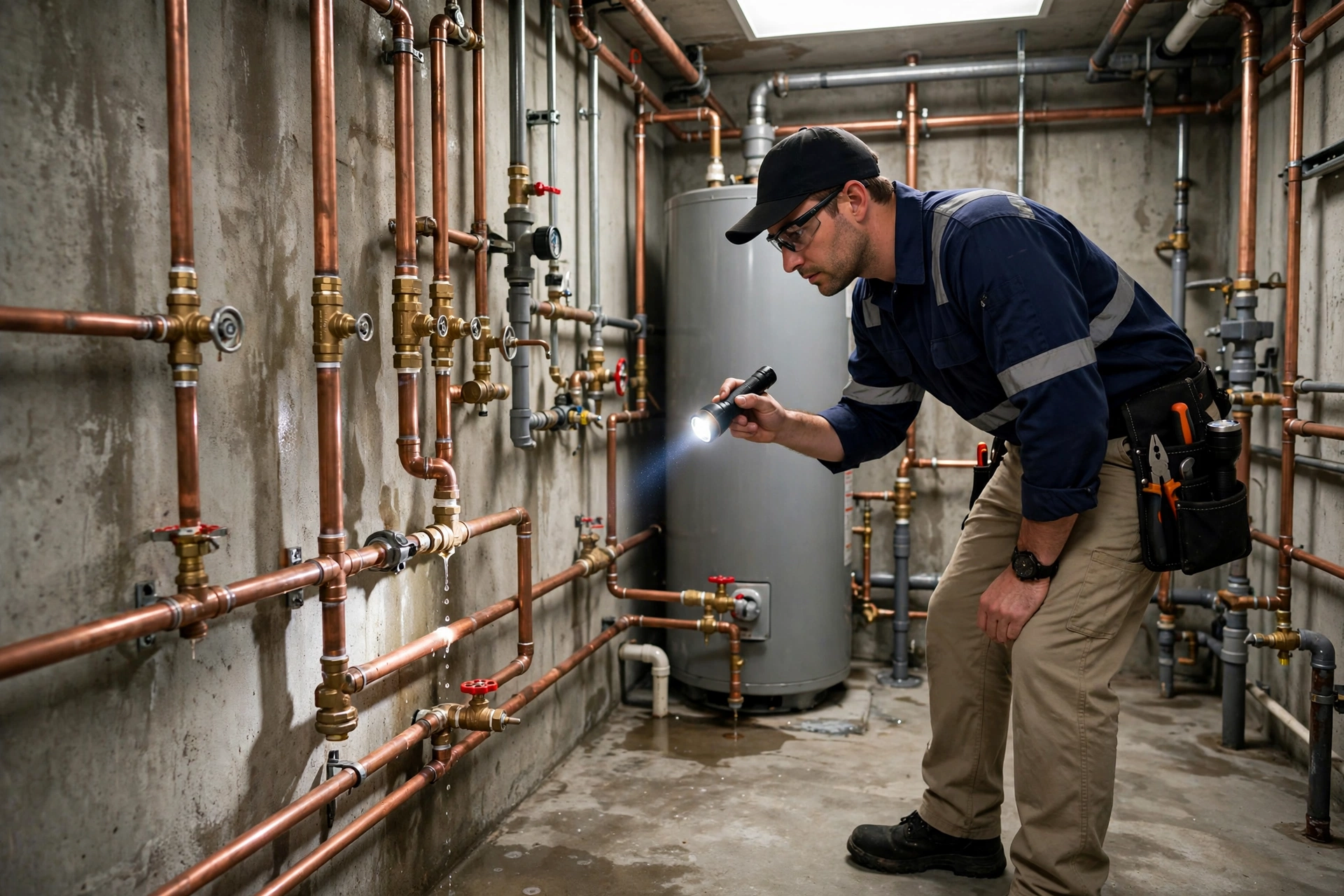
Two routine checks that catch commercial leaks early, before tenants or bills do.
- The monthly restroom sweep. Walk every restroom and listen for running toilets or urinals, look under sinks, and check ceilings below upper-floor restrooms for new stains. Log what you find.
- The meter log. Record the water meter reading at closing and again at opening, with no overnight usage expected. A higher morning number means water moved overnight, and something is leaking.
Stop and call if you find active flooding, a ceiling bulging with water, or a leak threatening food-service areas or electrical rooms. Shut the nearest valve first, then call. After hurricane season, add a full property walkthrough: saturated ground hides new leaks. If the bill spiked but the building checks out, compare against high water bill in Fort Myers.
Commercial leak detection FAQs
How do I know if my commercial building has a leak?
Watch for a climbing utility bill with no usage change, restroom fixtures running constantly, damp ceiling tiles or wall stains, musty odors in storage areas, tenant complaints about dampness, or soggy landscaping between irrigation cycles. Two or more together means water is escaping somewhere in the building's systems.
Can leak detection be done without closing my business?
In most cases, yes. Detection is non-invasive: acoustic listening, thermal imaging, and line locating all work from the surface without opening walls or shutting down operations. Call and describe your operating hours, and the visit is planned around your business to keep disruption minimal.
How long does commercial leak detection take?
It depends on the property size. A single restaurant or retail space usually takes one to three hours. Larger offices, warehouses, or multi-unit buildings with several suspect areas take longer, sometimes a full day. You get the pinpointed source, documented findings, and repair options before the provider leaves.
Do I get documentation for insurance or my records?
Yes. Commercial visits conclude with written documentation of the findings, including the marked leak location and the recommended next steps. Property managers use it for maintenance records, and it supports insurance claims when water damage is involved in the claim.
What is the difference between commercial and residential leak detection?
The methods overlap, but commercial jobs deal with larger systems: multiple restrooms, commercial kitchens, long irrigation runs, and multi-tenant plumbing. Scheduling works around business hours, findings come with written documentation, and the focus is containing business impact, not just finding water.
My restaurant's water bill spiked: where do we start?
Start with the restroom sweep and the overnight meter log from the checks above. In restaurants, the usual suspects are running toilets, a stuck urinal valve, the dishwasher supply line, and irrigation zones. If the meter moves overnight with everything off, call: the leak is confirmed and needs pinpointing.
Last updated: October 2026
Don’t let a leak hurt your business.
One call pinpoints the source with minimal disruption. Describe the property and your hours. We’ll connect you with a local Fort Myers pro today.