Underground Leak Detection in Fort Myers, FL
An underground leak is a break in a buried water line: the service line from the meter to your home, or a supply line beneath the yard. You never see the pipe, only its effect on the ground above.
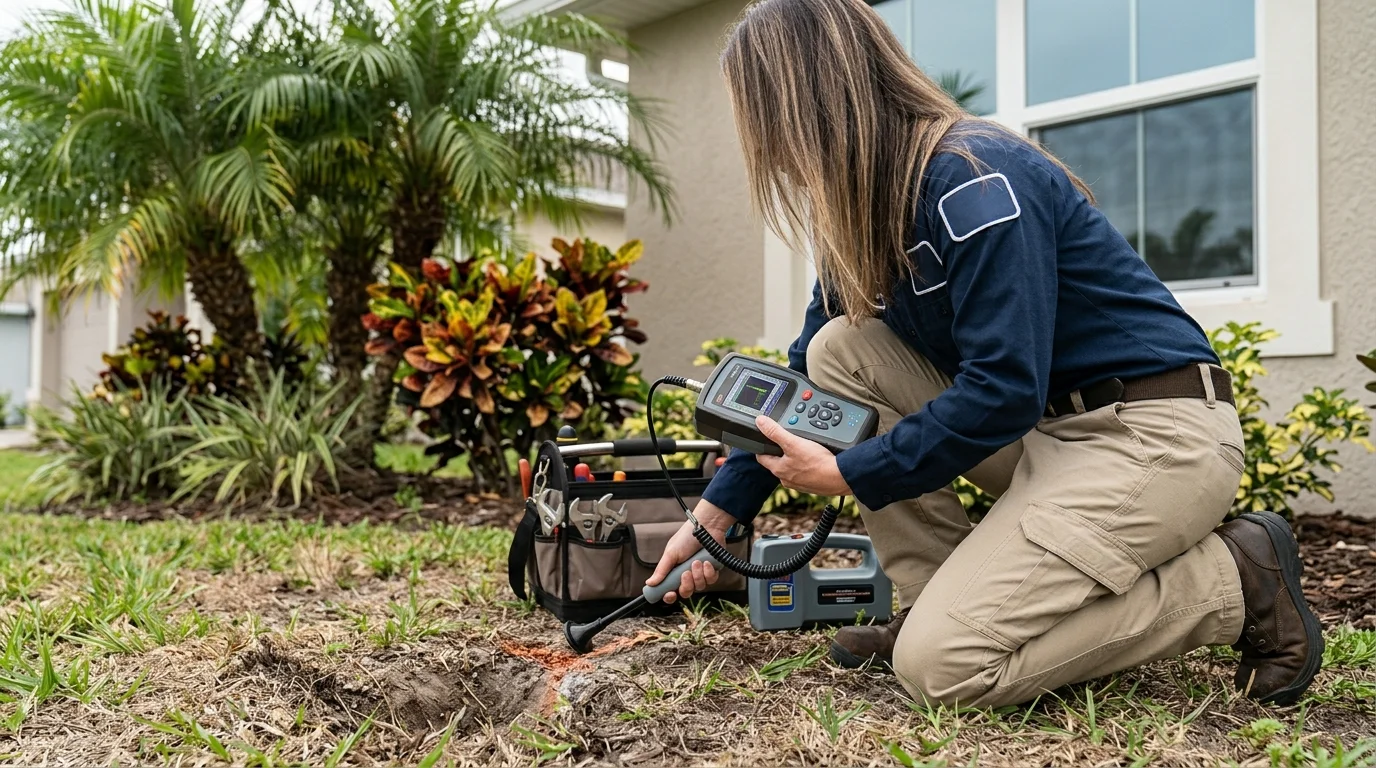
It pinpoints the break from the surface with acoustic listening, tracer gas, and line locating, with no blind digging. Call, describe what your yard is doing, and you'll be connected with a local Fort Myers pro. If the dampness is inside the house instead, start with water leak detection.
- 24/7 availability
- No-dig locating
- Local Fort Myers pros
What is underground leak detection?
An underground leak is a break in a buried water line, such as the service line from the meter to your home. Acoustic listening, tracer gas, and line locating pinpoint the break from the surface, so the yard is opened only where the repair is needed. Fort Myers Leak Pros connects you with independent local providers.
| What you notice | What it means | Start here |
|---|---|---|
| Soggy patch or standing water, no recent rain | Water escaping a buried line | Meter test |
| Soft, sunken, or collapsing spot in the lawn | Soil washing out around the break | Acoustic listening |
| One area of grass grows greener and faster | Steady underground watering | Line locating |
| Meter spins with everything turned off | Water leaving the system somewhere | Zone isolation test |
How do I know if I have an underground leak?
Buried leaks announce themselves through the ground. Two or more of these together means water is escaping beneath your property.
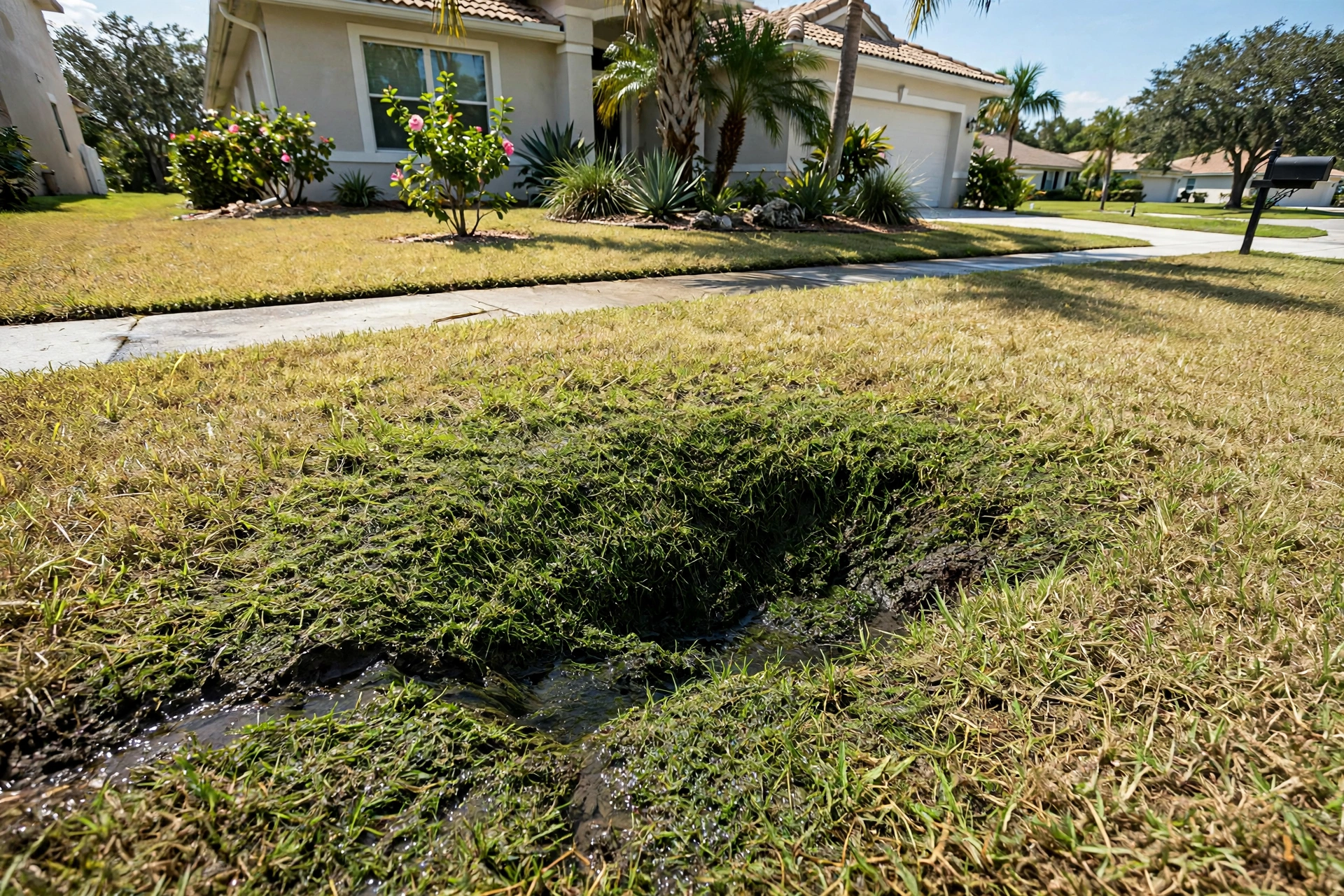
- A soggy patch or standing water with no recent rain
- A soft, sunken, or collapsing spot in the lawn
- Grass that grows greener and faster in one area
- A spinning meter, everything off
- A sudden drop in water pressure inside the home
- Running water with no fixture on
- Cracks forming in a driveway, walkway, or patio
- Soil washing away around the foundation
The trickiest sign is the wet spot: irrigation system or main water line? Read wet spot in yard: irrigation or main line leak for the tell-tale differences. A spiking bill with a dry yard points inside the house instead, see high water bill in Fort Myers.
What happens during underground leak detection?
-
Describe the symptoms
Call and describe the yard: where the soggy spot is, when it appeared, whether the meter spins. The local provider plans the listening route from that detail.
-
The line is traced, then the break is pinpointed
First the buried line's path is mapped with locating equipment. Then acoustic sensors listen for the hiss of escaping water, and tracer gas confirms the exact spot. The break is marked on the surface with paint or flags.
-
You review the repair plan
Once the break is marked, the provider explains the repair options and confirms the plan in writing, so the excavation stays small and exactly over the break.
New to this? See how leak detection works, start to finish.
What causes underground leaks in Fort Myers?
Buried lines fail for predictable reasons, and Fort Myers soil and weather accelerate most of them, especially after hurricane season. Four culprits cause the majority:
Corroded service lines
Older galvanized or copper service lines corrode from the outside in, especially in damp, mineral-rich soil, and a line underground for decades can develop pinholes along its full length.
Shifting sandy soil
Fort Myers sits on loose, sandy soil that shifts with heavy rain and storms, stressing joints and bends in buried lines until they crack.
Tree root intrusion
Roots seek moisture around buried lines and force their way into tiny cracks and loose joints, widening them until the line breaks.
Irrigation and construction damage
Trenching for irrigation, landscaping, or fence posts nicks buried lines more often than expected. The nick holds for a while, then lets go where nobody sees it.
How can I check for an underground leak myself?
Two safe checks confirm escaping water, using your water meter.
- The meter test. Turn off every fixture, appliance, and irrigation zone, then watch the meter's low-flow indicator for 15 minutes. If it moves, water is escaping somewhere.
- The zone isolation test. If the meter moves, shut off the irrigation main valve and retest. If the meter stops, the leak is on the irrigation side. If it keeps moving, it is in the main service line.
Stop and call if the meter keeps spinning with everything off, a sinkhole appears, or water pools near the foundation. Never dig blindly: you can strike the line, buried utilities, or irrigation wiring. If the yard looks fine but water is going missing, the leak may be inside, see water leak detection.
Underground leak detection FAQs
How do I know if I have an underground water leak?
Watch for soggy patches with no recent rain, soft or sunken spots in the lawn, one area of grass growing faster, a meter that spins with everything off, or a sudden drop in indoor water pressure. Two or more together signals a buried line leak.
How is an underground leak found without digging up my whole yard?
Providers work from the surface: line locating maps the buried pipe's path, acoustic sensors listen for the hiss of escaping water, and tracer gas can confirm the exact spot. The break is marked with paint or flags, so digging happens only over the repair point.
How long does underground leak detection take?
Most appointments take one to three hours, with answers usually on the spot the same day. A large property, multiple buried lines, or a very faint leak takes longer. You get the marked location and recommended next steps before the provider leaves.
Is it my irrigation system or my main water line?
The meter test answers it. Turn everything off and watch the meter, then shut off the irrigation main valve and watch again. If the meter stops, the leak is on the irrigation side. If it keeps spinning, it is in the main service line feeding the house.
Can an underground leak damage my home's foundation?
Yes. Escaping water washes soil from around and beneath the foundation, which can lead to settling, cracks in driveways and walkways, and in severe cases foundation movement. A leak close to the house deserves fast attention, before the soil loss spreads.
What is the difference between underground leak detection and slab leak detection?
Underground leak detection covers buried lines outside the home: the service line from the meter and supply lines under the yard. Slab leak detection covers pressurized lines beneath the home's concrete foundation. Soggy ground in the yard: start here. Warm spots or dampness on interior floors: see slab leak detection.
Last updated: October 2026
Don’t dig up the yard to find it.
One call pinpoints the break from the surface. Describe what your yard is doing, and we’ll connect you with a local Fort Myers pro today.