Warm Spot on the Floor: Is It a Slab Leak?
A warm spot on the floor that you cannot explain can be a sign of a slab leak, especially if it stays warm when the sun is not shining on it. It is not always a leak, though. Here is how to tell what is likely going on and what to do next.
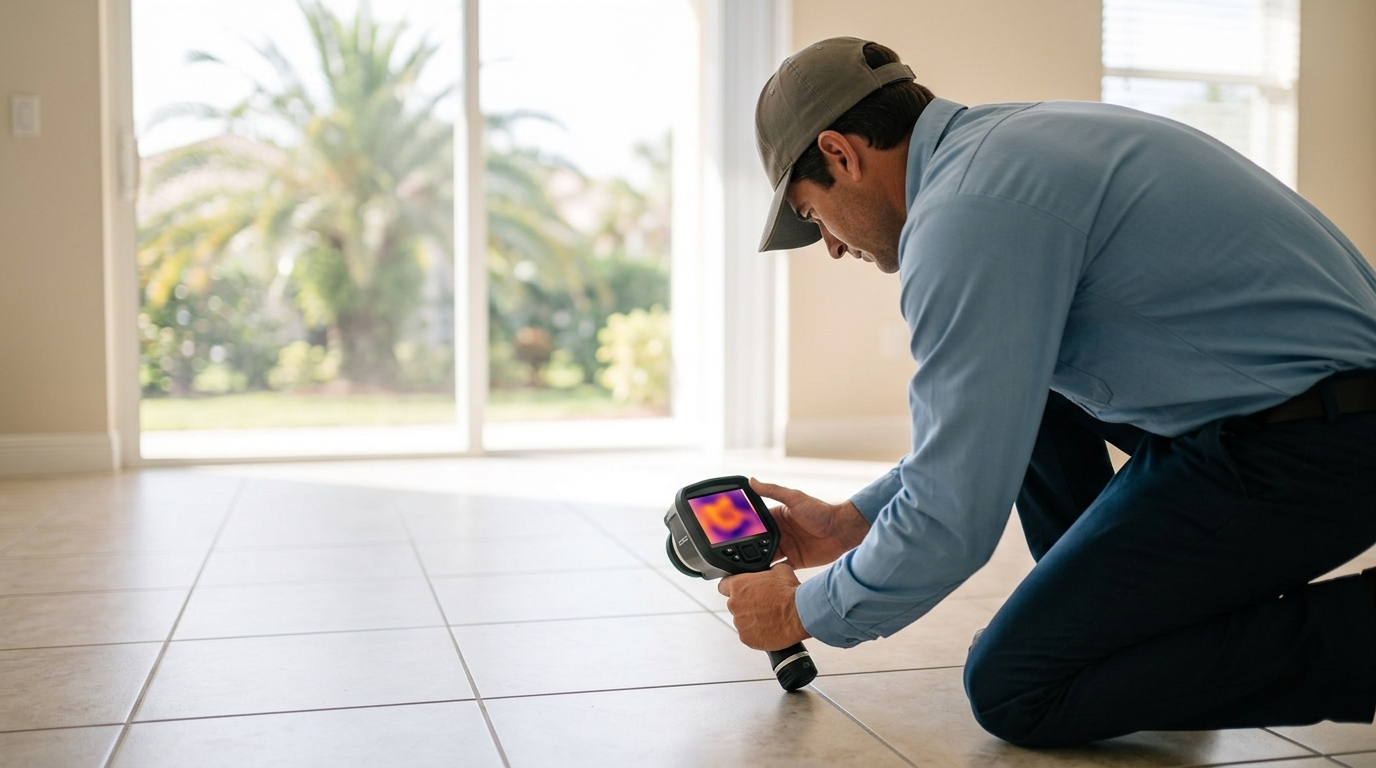
Many Fort Myers homes are built on a concrete slab, and some of the plumbing runs through or beneath it. When a hot water line leaks there, the warm water can heat the concrete above it, which is why people notice a patch of floor that feels warmer than the rest. Because the pipe is buried, the leak can run for a long time before anything else shows up.
Other reasons a floor can feel warm
- Sunlight coming through a window or glass door
- A heat source nearby, such as a water heater closet, a large appliance, or electronics
- Dark flooring that absorbs and holds heat
- A warm wall or room on the other side of the area
Check the spot in the evening and on a cloudy day. A spot that stays warm regardless of the sun, and sits away from any obvious heat source, deserves a closer look.
Signs that point to a slab leak
- A warm spot that stays warm at night or on cloudy days
- A water meter that keeps moving when all water is off
- The sound of running or hissing water when nothing is in use
- Hot water that takes longer to arrive, or a water heater that seems to run constantly
- Damp or discolored carpet, lifting laminate or wood, or loose tiles
- A musty smell near a baseboard
- A higher water bill with no change in habits (see our guide to a high water bill in Fort Myers)
One sign alone is not proof. Two or more together make a leak more likely.
What to do right now
- Mark the spot. Use painter's tape, note the date and time, and take a photo. Check it again at different times of day.
- Run the meter test. Turn off all water, note the meter reading or leak indicator, wait 30 to 60 minutes, and check again. Our guide to slab leak vs plumbing leak explains the test in detail.
- Look and listen. With the house quiet, listen near the floor and nearby walls for running water.
- Shut off the main valve if you see water or hear a rush of water.
- Do not drill, cut, or break into the slab to look for the pipe. You could hit other lines and make the damage worse.
- Talk to your insurer if you plan to file a claim, and ask what they need before repairs begin. Our guide explains whether Florida homeowners insurance covers leak detection.
How a leak detection visit helps
Guessing where a slab leak is can mean opening large areas of flooring. Slab leak detection uses non-invasive tools to narrow down where the pipe is leaking, so a repair can focus on the right spot. Ask the provider what the inspection covers, what you will receive afterward, and whether any diagnostic fee applies. You can read what to expect on our how it works page.
Waiting rarely makes the situation better. A leak that keeps running wastes water, can dampen the flooring and subfloor above it, and can lead to mold if moisture stays trapped.
Frequently asked questions
Is a warm spot on the floor always a slab leak?
No. Sunlight, nearby heat sources, and dark flooring can all warm a floor. But if the spot stays warm without an obvious reason, it is worth checking.
Can a slab leak happen on a cold water line?
Yes. A cold water line leak may not create a warm spot and can show up instead as a damp floor, a moving water meter, or a higher bill.
Is a slab leak an emergency?
Not always, but water keeps escaping while it goes unaddressed. If you see flooding, shut off the main valve and arrange an inspection as soon as you can.
How is a slab leak found without breaking the floor?
Providers use non-invasive locating methods, such as listening equipment and thermal tools, to narrow down the leak. The right method depends on the property.