Older Homes in Fort Myers: Common Pipe Problems to Watch For
Older homes in Fort Myers have plenty of charm, but the plumbing behind the walls and under the slab has often been working for decades. Knowing which pipe problems show up most often helps you catch trouble early, before a small leak turns into damaged flooring or a surprise water bill.
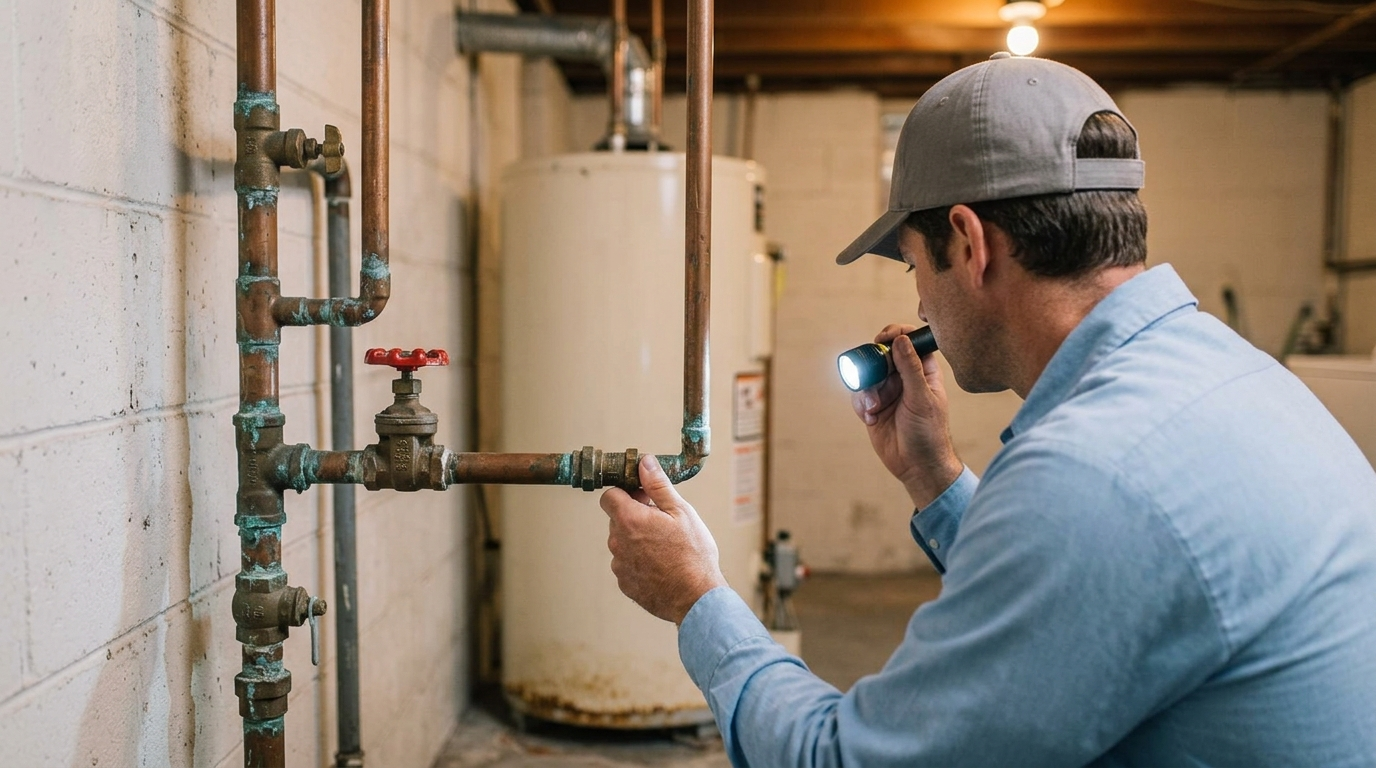
Which pipe problems are most common in older homes?
Four materials cause most of the trouble. The dates below are approximate, and many homes have a mix because sections were repaired or replaced over the years.
| Roughly when | Pipe | Typical problem | What you may notice |
|---|---|---|---|
| Before the 1960s | Galvanized steel supply pipe | Rust builds up inside, narrowing the pipe and weakening threaded joints | Low pressure, brown or rusty water |
| Through the 1970s and later | Cast iron drain lines | Corrosion and cracks; roots can enter joints | Slow drains, sewer odor, damp spots near the foundation |
| Many decades of use | Copper supply lines | Pinhole leaks from corrosion; aging solder joints | Tiny wet spots, green or blue crust, rising bill |
| Late 1970s to mid-1990s | Polybutylene (PB) | Becomes brittle and can fail at fittings | Sudden leaks, often with little warning |
| Any age | Valves, supply hoses, water heater | Rubber and seals wear out; tanks corrode | Drips under sinks, a puddle near the water heater |
How can I tell what pipes my house has?
Look where pipes are exposed, such as near the water heater, under sinks, and at the main shutoff.
- Copper: reddish-brown metal, sometimes with green or blue crust at joints.
- Galvanized steel: dull gray with threaded fittings. Practical tip: a magnet sticks to galvanized steel but not to copper.
- Polybutylene: flexible gray, blue, or black plastic, often stamped “PB2110.”
- PVC or CPVC: rigid white, cream, or light yellow plastic, common in newer repairs.
- Cast iron: heavy, dark pipe on drain lines, sometimes visible in a garage or utility area.
Not sure? Ask a licensed plumber to identify what you have, and take dated photos for your records.
What early warning signs should I look for?
Most aging-pipe problems start small. Watch for:
- Low pressure at several fixtures at once
- Rusty or discolored water when you first turn on a tap
- Green or blue crust on copper pipes, or small wet spots along a line
- A water bill that rises with no change in habits (see our guide to a high water bill in Fort Myers)
- Slow drains, gurgling, or a sewer smell
- A greener, faster-growing patch of lawn or a soggy spot in the yard
- A warm spot on the floor
Why does a slab foundation make older plumbing harder to monitor?
Because many Florida homes have supply lines running under or through the concrete, a leak there stays out of sight and can run for a long time.
If you notice a warm patch, a moving meter, or damp flooring, read warm spot on the floor: is it a slab leak? and learn how slab leak detection locates the problem without guessing. Our guide to slab leak vs plumbing leak also shows how to run a simple meter test.
Does one leak mean I need to repipe?
Not always. A single isolated leak can often be repaired. Repeated leaks, or leaks on an aging material like polybutylene or old galvanized pipe, may point to a bigger fix.
Ask a licensed plumber to compare repair and replacement for your situation. Leak detection can help by pinpointing where water is escaping and showing whether the problem is one spot or several, but it does not replace a plumber's evaluation of the overall pipe condition.
What can I do now to protect an older home?
A few low-cost habits catch most problems early.
- Know your main shutoff valve and turn it off and on twice a year to make sure it still works.
- Replace cracked, bulging, or old rubber supply hoses at toilets, sinks, and the washing machine.
- Check your water heater's age. The label shows the manufacture date, and tank units often last roughly 8 to 12 years.
- Place inexpensive water leak sensors under sinks and near the water heater.
- Run a meter test once or twice a year, and again after any major storm (see our leak check after a hurricane guide).
- Keep dated photos of pipes and repairs.
Does insurance care about old plumbing?
Sometimes. Some insurers ask about plumbing materials or age, particularly polybutylene and galvanized pipe, and policies treat water damage differently. Check your own policy and ask your agent, and read what to ask in our Florida homeowners insurance and leak detection guide.
Frequently asked questions
What pipes are most common in older Fort Myers homes?
It depends on the build year. Older homes often have copper or galvanized steel supply lines, and some mid-era homes have polybutylene. Cast iron was common for drains. A licensed plumber can confirm what you have.
Are pinhole leaks in copper pipes common in Florida?
They are a well-known issue in older copper plumbing. Age, water chemistry, and corrosion all play a role. Tiny leaks can run unnoticed, so a rising water bill is often the first clue.
Is polybutylene pipe dangerous?
It is not an immediate hazard, but it has a history of failing with little warning, and some insurers ask about it. If you have it, ask a licensed plumber to assess it.
How do I check for galvanized pipes?
Look for dull gray steel pipe with threaded fittings. A magnet will stick to galvanized steel but not to copper. Low pressure and rusty water are common signs.
Should I repipe my whole house after one leak?
Not always. One isolated leak may be repaired. Several leaks, or leaks on aging pipe material, may point to a larger fix. Ask a licensed plumber about repair versus replacement.
How often should I check an older home for leaks?
Look under sinks and around the water heater every few months, and run a meter test once or twice a year. Check again after any major storm.
Can leak detection tell me if my pipes need replacing?
It can locate leaks and help show whether the problem is isolated, but it does not replace a plumber's evaluation of the overall condition of your pipes.