Hidden Water Leak Detection in Fort Myers, FL
A hidden water leak is concealed inside your home's structure: behind drywall, above a ceiling, or beneath flooring. You rarely see the water, only the clues it leaves: a stain, a musty smell, bubbling paint.
Hidden water leak detection finds the exact source without opening walls blindly. Moisture meters, thermal imaging, and acoustic listening all work from the surface. Call, describe the clues, and you'll be connected with a local Fort Myers pro. Not sure where the leak is at all? Start with water leak detection instead.
- 24/7 availability
- Non-invasive detection
- Local Fort Myers pros
What is hidden water leak detection?
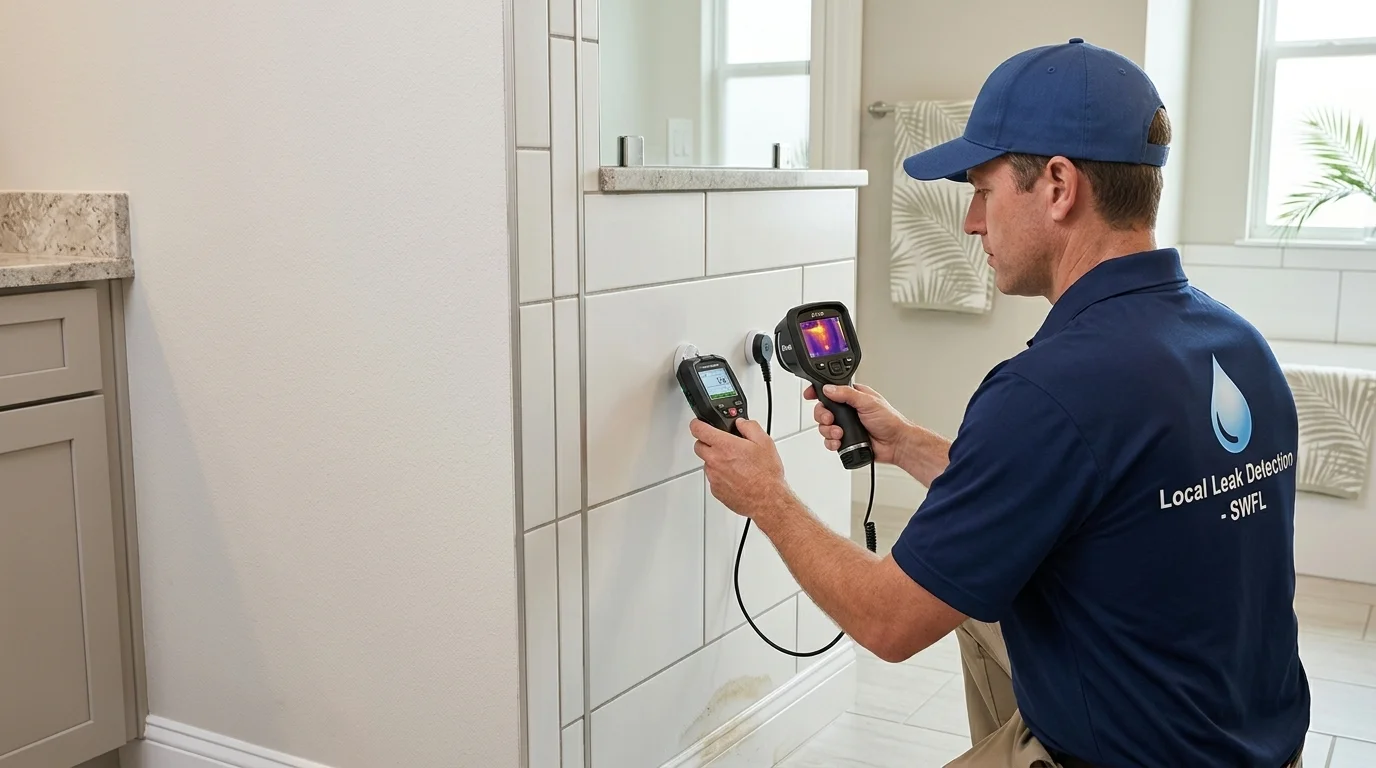
A hidden water leak is a leak concealed inside your home's structure: behind drywall, above ceilings, or beneath flooring. Hidden water leak detection uses moisture meters, thermal imaging, and acoustic listening to locate it without opening walls blindly. Fort Myers Leak Pros connects Fort Myers homeowners with independent local leak detection providers.
| What you notice | Where it hides | Start here |
|---|---|---|
| Stain spreading on a wall or ceiling | Pipe behind the drywall | Moisture scan |
| Bubbling paint or warped baseboards | Slow leak at a joint or fitting | Thermal imaging |
| Musty smell with no visible water | Trapped moisture in a wall cavity | Moisture mapping |
| Dripping sound inside a wall | Pinhole in a supply line | Acoustic listening |
How do I know if I have a hidden water leak?
Hidden leaks announce themselves through damage, not water. If two or more of these show up together, get a hidden leak check before opening anything.
- Stains or discoloration spreading on walls or ceilings
- Paint that bubbles, peels, or blisters
- Baseboards or flooring that warp or pull away
- A musty or earthy smell in one room or closet
- A wall that feels damp
- A faint dripping or hissing sound inside a wall
- Mold or mildew growing on a wall or ceiling
- A damp patch that keeps returning
These are the classic signs of a hidden water leak: moisture trapped where you cannot see it. If the dampness sits under the concrete slab rather than in a wall, see slab leak detection instead.
What happens during hidden leak detection?
-
Describe the clues
Call and describe what you're seeing: the stain, the smell, the sound, which wall. The local provider uses that detail to decide where to start scanning.
-
The wall is scanned, not opened
Moisture meters read dampness through drywall, thermal imaging shows patterns where water sits behind the surface, and acoustic listening picks up the hiss of a pressurized line. Together they map the wet area with no holes.
-
You review the repair options
Once the source is marked, the provider explains the fix and confirms the plan in writing first, so the opening stays small and exactly where it needs to be.
New to this? See how leak detection works, start to finish.
What causes hidden leaks in Fort Myers homes?
Concealed pipes fail quietly, and Fort Myers conditions help them along, including the pipe problems older Fort Myers homes develop. Four culprits cause most hidden leaks:
Pinhole corrosion
Hard, mineral-heavy water wears copper supply lines from the inside until a pinhole opens behind a wall, starting as a mist you will never hear.
Failed fittings and joints
Elbows, tees, and valve connections are the weak points of any concealed run. A weeping joint can soak insulation and drywall for months before a stain appears.
Appliance supply lines
Washing machine hoses, dishwasher lines, and ice-maker tubes run through walls and cabinets. When one splits, water spreads inside the structure first.
Renovation damage
Nails and screws from shelving, trim work, or remodels puncture concealed pipes more often than expected. The nick may weep for years before it lets go.
How can I check for a hidden leak myself?
Two safe checks that catch hidden moisture early, using only things already in the house.
- The tissue test. Press a dry tissue against a suspect baseboard, wall section, or pipe joint for a minute. Even slight dampness shows immediately.
- The cabinet patrol. Monthly, open under-sink cabinets, the water heater closet, and washing machine connections. With a flashlight, look for staining, warping, or green corrosion on valves and fittings.
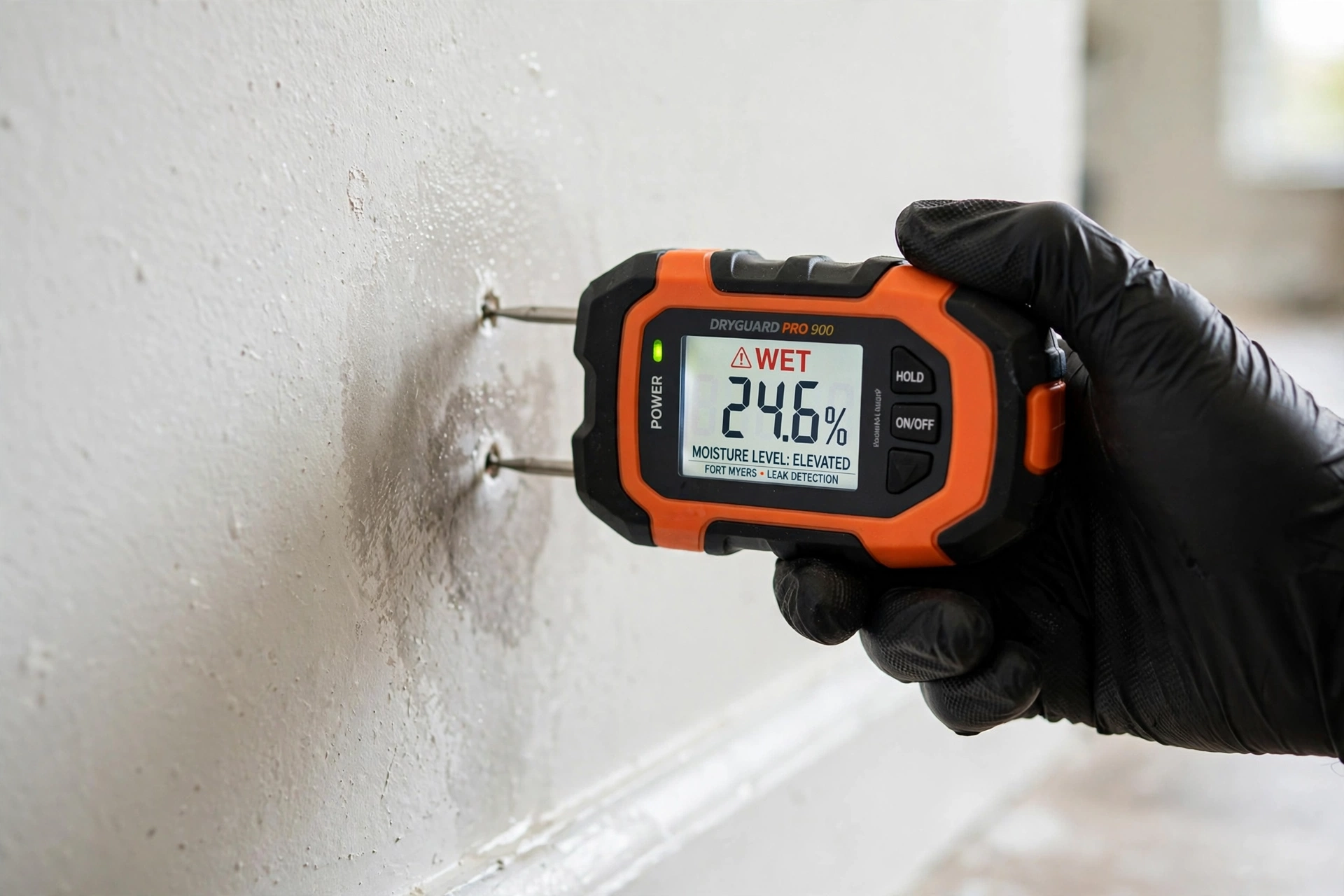
Stop and call if you find active dripping, a bulging wall or ceiling, or spreading mold. Do not open the wall yourself: a blind cut can slice the pipe and turn a pinhole into a flood. If the fixture itself is the problem, see plumbing leak detection.
Hidden water leak detection FAQs
How do I know if I have a hidden water leak?
Watch for stains spreading on walls or ceilings, paint that bubbles or peels, baseboards that warp, a musty smell in one room, or a faint dripping sound inside a wall. Two or more together is a strong signal. A moisture meter reading confirms it without opening anything.
How is a hidden leak found without tearing open my walls?
Providers scan from the surface. Moisture meters read dampness through drywall, thermal imaging shows patterns where water sits behind the surface, and acoustic listening picks up the hiss of a pressurized line. Together they map the wet area and mark the source, so any opening is small and made only after the location is known.
How long does hidden leak detection take?
Most appointments take one to two hours, with answers usually on the spot from wall scanning and moisture mapping. Larger homes or several suspect areas take longer than a single bathroom wall. You get the marked source and recommended next steps before the provider leaves.
What damage can a hidden leak cause?
A slow concealed leak soaks insulation, drywall, and framing, leading to mold, wood rot, and ruined finishes. Because it stays out of sight, damage spreads further than a visible leak before anyone notices. Finding it early keeps the repair to a small section instead of whole rooms.
Should I open the wall myself to look?
No. A blind cut risks slicing the pipe and turning a pinhole into an active flood, and it destroys the evidence a pro uses to trace the source. Surface scanning locates the leak first, so any opening is small and exactly over the problem.
What is the difference between hidden water leak detection and a general water leak check?
A general water leak check finds a leak anywhere in the home: walls, slab, or yard. Hidden water leak detection covers one situation: a leak concealed inside the structure that you cannot see. If you see stains or smell mustiness in a wall, start here. If water is going missing and you cannot tell from where, start with water leak detection.
Last updated: October 2026
A stain on the wall is a leak asking to be found.
Hidden water keeps spreading behind the surface. Describe the clues you're seeing. We’ll connect you with a local Fort Myers pro today.