Plumbing Leak Detection in Fort Myers, FL
A plumbing leak starts at a fixture or appliance: a dripping faucet, a running toilet, a puddle under the sink, a weeping water heater. These are the leaks you can usually see or hear. The job is confirming exactly which part is failing.
It isolates the culprit through fixture-by-fixture testing, dye tests, and pressure checks, so the repair targets the right part the first time. Call, describe the fixture, and you'll be connected with a local Fort Myers pro. If water is going missing with no fixture in sight, start with water leak detection.
- 24/7 availability
- Fixture-level testing
- Local Fort Myers pros
What is plumbing leak detection?
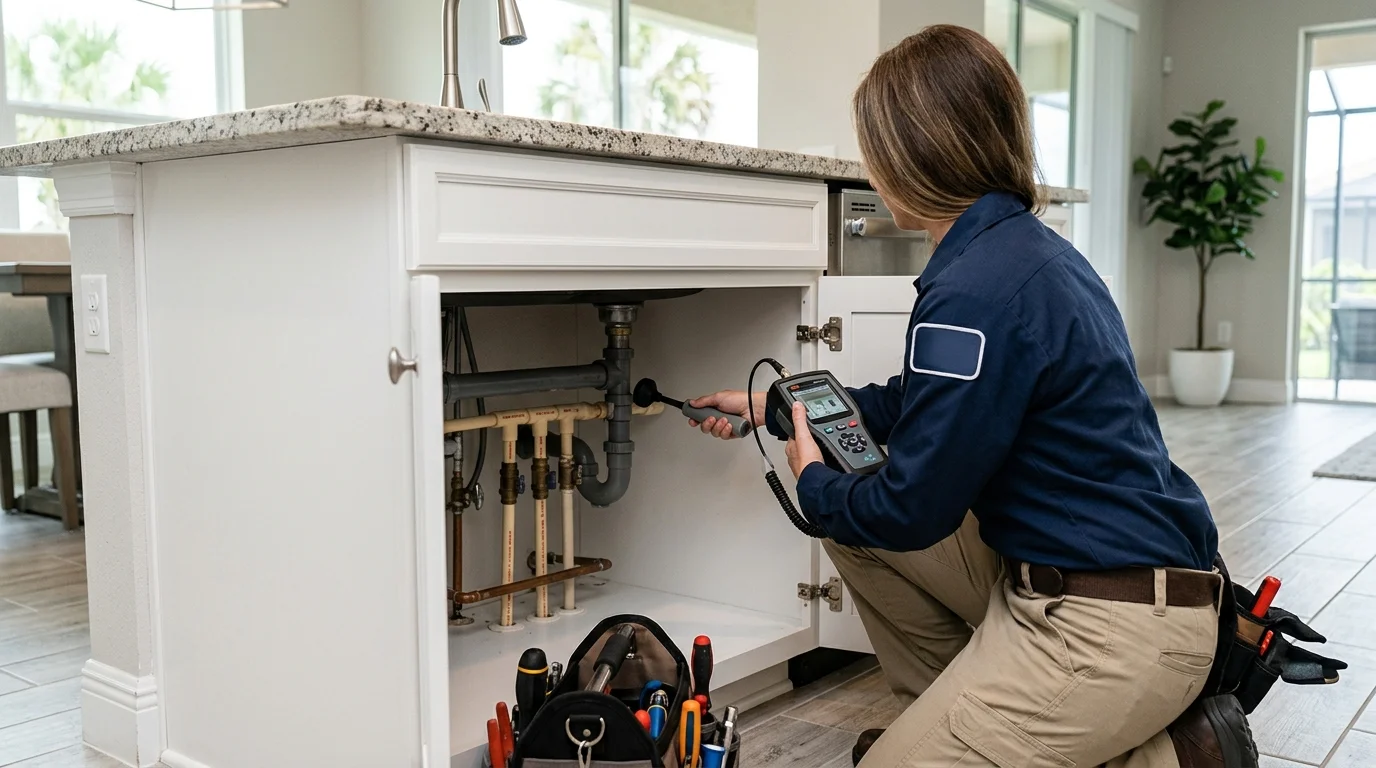
A plumbing leak is a leak at a fixture or appliance: faucets, toilets, under-sink lines, or water heaters. Detection uses fixture-by-fixture testing, dye tests, and pressure checks to confirm which part is failing, so the repair targets the right component. Fort Myers Leak Pros connects you with independent local providers.
| What you notice | Likely culprit | Start here |
|---|---|---|
| Faucet drips when off | Worn washer or cartridge | Fixture check |
| Toilet runs on its own | Failed flapper or fill valve | Dye test |
| Puddle under the sink | Supply line or trap connection | Cabinet inspection |
| Water at heater base | Tank or valve weeping | Heater check |
How do I know if I have a plumbing leak?
Plumbing leaks leave evidence at the fixture. If any of these sound familiar, the failing part is close by.
- A faucet that drips when off
- A toilet that runs by itself
- A puddle under a sink
- Stains inside a vanity or cabinet
- A musty smell under the sink
- Water at the base of the water heater
- Damp washing machine connections
- Low pressure at one fixture only
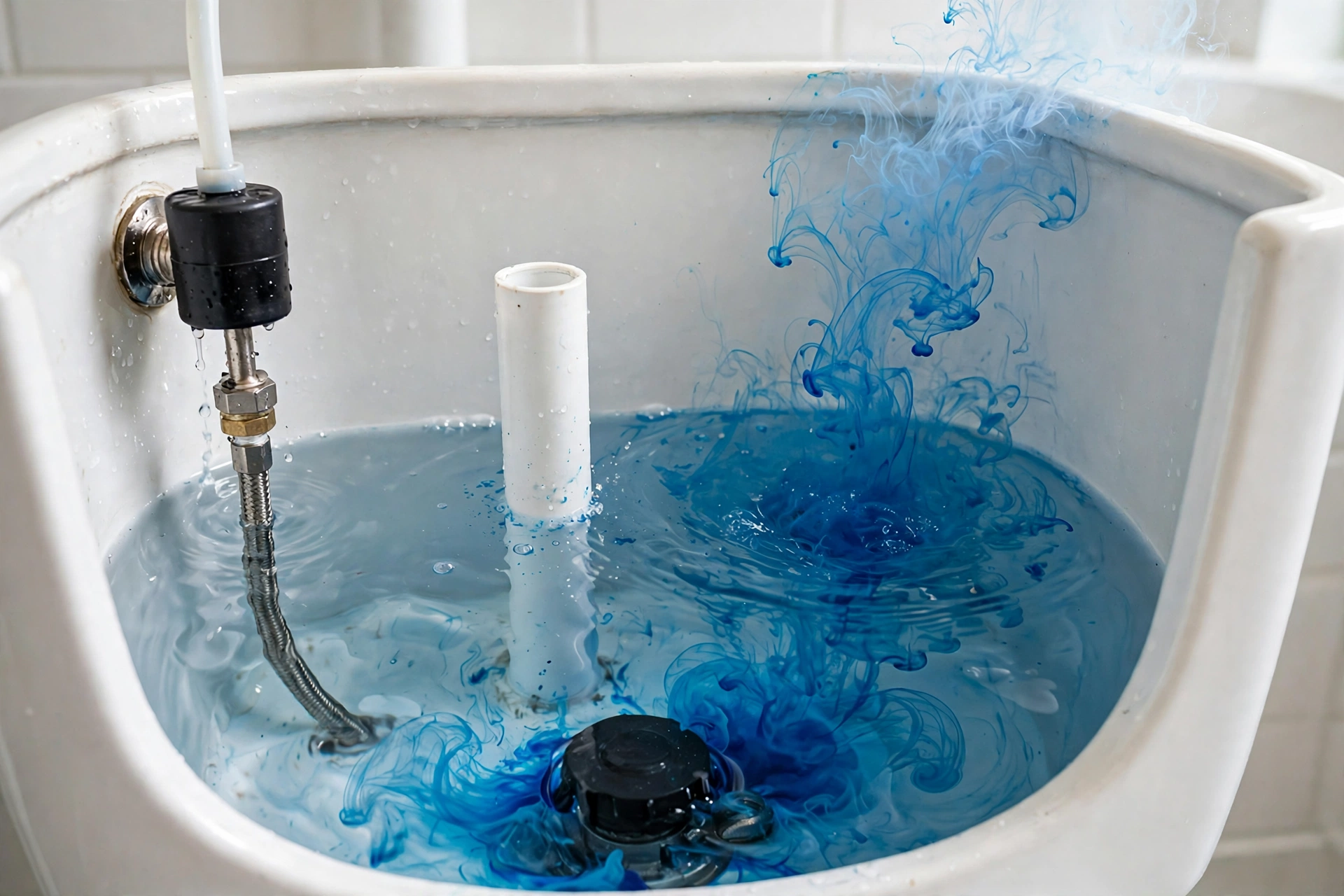
A silently running toilet is the classic invisible waster. Confirm it in minutes with toilet running silently: the dye test. If the dampness is inside a wall with no fixture nearby, see hidden water leak detection instead.
What happens during plumbing leak detection?
-
Describe the fixture
Call and describe the culprit: the dripping faucet, the running toilet, the puddle under the sink. The local provider brings the right testing approach for it.
-
Each suspect is tested in turn
Fixtures are isolated and tested one by one. Dye in the toilet tank reveals a silent flapper leak, supply lines and valves are checked under pressure, and thermal imaging traces hot-water lines to the failing point. The failing part is identified, not guessed.
-
You review the repair plan
Once the culprit is confirmed, the provider explains the options and confirms the plan in writing, so you approve the fix for the right part.
New to this? See how leak detection works, start to finish.
What causes plumbing leaks in Fort Myers homes?
Fixture leaks come from wear, water chemistry, and age. In Fort Myers, hard water and older housing stock do most of the damage (see older homes: pipe problems). Four culprits cause the majority:
Worn washers and cartridges
Faucet washers, O-rings, and cartridges wear out with every use. Hard, mineral-heavy water grinds them down faster.
Failed toilet components
Flappers warp and fill valves stick, letting water slip silently from tank to bowl around the clock: the most common household leak, and the easiest to miss.
Corroded supply lines and valves
Braided and copper supply lines under sinks and behind toilets corrode at their connections, especially shutoff valves. Green crust or white buildup on a valve is an early warning.
Aging water heaters
Tanks corrode from the inside out. The first sign is often a small puddle at the base or a weeping relief valve, and catching it early is the difference between a planned replacement and a flooded utility area.
How can I check for a plumbing leak myself?
Two checks that catch common fixture leaks, no tools required.
- The toilet dye test: drop food coloring into the tank, wait 15 minutes without flushing, then look in the bowl. Color in the bowl means the flapper is leaking silently.
- The dry-hand cabinet check. Run each faucet, then feel every line, valve, and trap under the sink with a dry hand. Wetness or green corrosion points to the failing part.
Stop and call for a burst supply line, water spraying from a valve, or a steadily leaking water heater. Shut the nearest valve or main supply first, then call. If the bill spiked but every fixture checks out, the leak is elsewhere, see high water bill in Fort Myers.
Plumbing leak detection FAQs
How do I know if I have a plumbing leak?
Look at the fixtures: a dripping faucet, a toilet that runs or refills on its own, a puddle under the sink, stains inside a vanity, or water at the water heater base. Low pressure at one fixture only also points to a fixture problem. If every fixture checks out, the leak is likely concealed or underground.
How can I tell if my toilet is leaking silently?
Use the dye test: drop food coloring into the tank, wait 15 minutes without flushing, then look in the bowl. If color appears, the flapper is letting water slip from tank to bowl around the clock. It is the most common household leak, and a failed flapper is a straightforward fix once confirmed.
Is it the faucet or the supply line under the sink?
Run the faucet and watch underneath with a flashlight. If water appears only while it runs and drips from the spout or handles, the faucet itself is the problem. If connections, valves, or the trap stay wet with the faucet off, the leak is in the supply line or drain assembly below.
How long does plumbing leak detection take?
Most appointments take under an hour, since fixture-by-fixture testing identifies the culprit quickly and the suspects are visible. A home with several suspect fixtures, or a leak that only appears under certain conditions, takes longer. You get the confirmed source and repair options before the provider leaves.
Should I try to fix a plumbing leak myself?
Replacing a toilet flapper or faucet washer is reasonable DIY, with the water shut off first. Leave pressurized supply lines, stuck valves, and anything inside a wall to a pro. A snapped valve turns a small drip into an emergency.
What is the difference between plumbing leak detection and hidden water leak detection?
Plumbing leak detection covers leaks at fixtures and appliances you can see, hear, or reach: faucets, toilets, under-sink lines, water heaters. Hidden water leak detection covers leaks concealed inside the structure with no fixture in sight: behind drywall, above ceilings, beneath flooring. Damp fixture area: start here. Damp wall, no fixture nearby: start there.
Last updated: October 2026
That drip is telling you which part failed.
One call confirms the culprit with fixture-level testing. Describe what’s dripping, running, or pooling, and we’ll connect you with a local Fort Myers pro today.