Leak Check After a Hurricane or Heavy Storm in Fort Myers
A leak check after a hurricane is one of the first things worth doing once it is safe to be home, because storms can crack or loosen plumbing in places you will not see. In Fort Myers, hurricane season runs from June 1 through November 30, so this applies to heavy summer storms too.
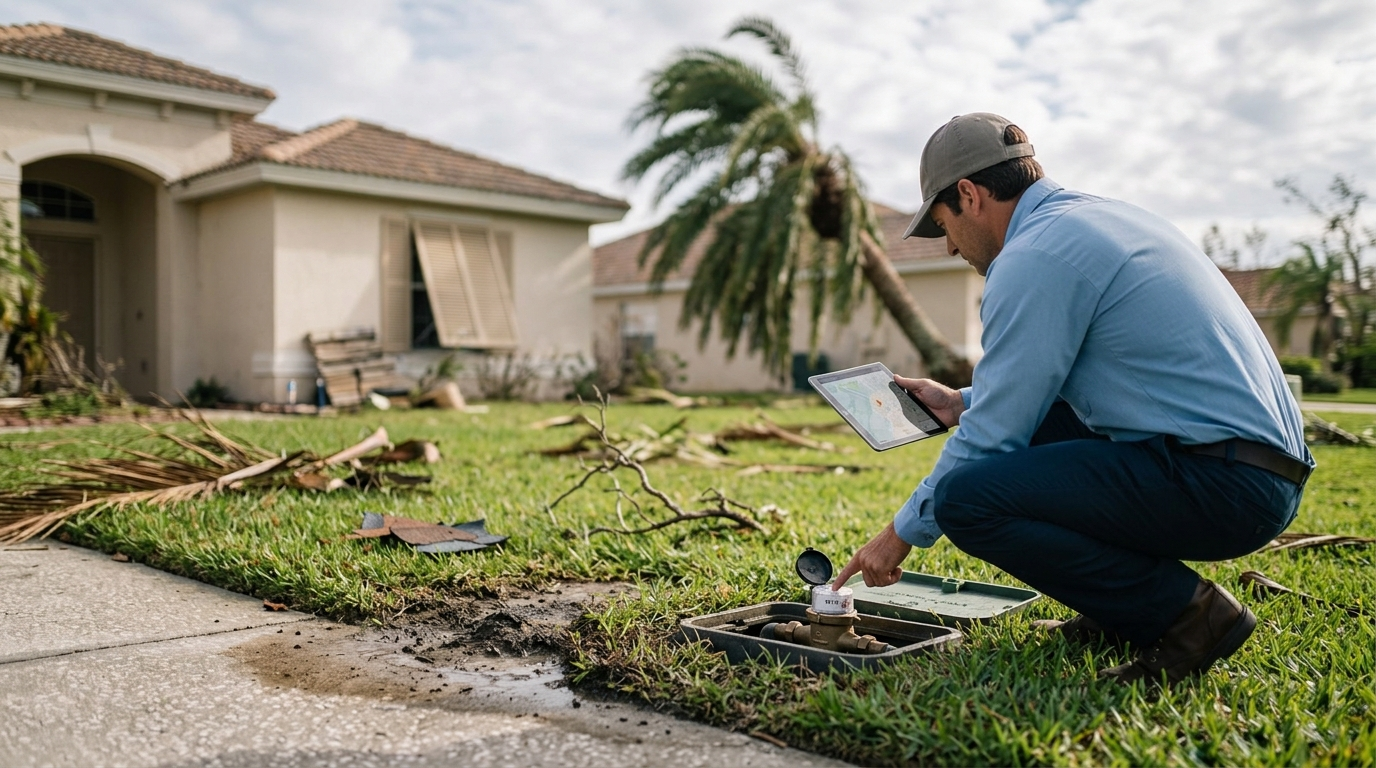
Is it safe to check for leaks right after a storm?
Only once the house is safe to enter. A leak can wait a few hours, but electrical and gas hazards cannot.
- Treat standing water indoors as unsafe until the power is off. Floodwater can hide live wiring and may be contaminated.
- If you smell gas, leave at once and call your gas provider or 911 from outside.
- Follow any boil-water notice from your utility before drinking or cooking with tap water.
- Wear boots and gloves, and watch for sagging ceilings and soft floors.
- Keep flooded outlets, appliances, and the electrical panel off until an electrician clears them.
What should I check in the first 24 hours?
Start with the main water valve, then look for obvious damage inside and out. Take photos before you clean anything.
- Find the main shutoff valve and make sure it turns. Debris and corrosion can make valves stick, and you want to learn that now, not during a leak.
- Walk the outside. Look for snapped hose bibs, bent pipes, torn-off sprinkler heads, and washed-out soil near the foundation.
- Check ceilings and the attic if it is safe. Brown stains or drooping drywall can come from roof damage, not plumbing.
- Look under sinks and around toilets and the water heater for moisture.
- Photograph your water meter with the date visible.
- Photograph all damage before cleanup, for your insurance claim.
Where do hidden leaks usually start after a storm?
Usually where the ground moved, where pressure changed, or where debris hit. Not every wet ceiling is plumbing, so this table helps you sort it out.
| Where | Why it can happen | Warning sign | Who to call |
|---|---|---|---|
| Underground supply line | Fallen trees and shifting or washed-out soil can pull or crack the line | Wet or sunken ground, moving meter | Leak detection, then plumber |
| Irrigation system | Debris, flooding, and cracked heads or valves | Soggy zone, weak spray | Irrigation contractor |
| Plumbing under the slab | Ground movement can stress buried lines | Warm floor spot, hissing sound | Slab leak detection |
| Joints and fittings | Pressure changes when service is restored can expose weak connections | New drip, damp wall | Plumber |
| Roof or attic | Wind-driven rain gets past damaged roofing | Stains that grow when it rains | Roofer |
Roof leaks and plumbing leaks can look the same on a ceiling. The difference is timing: a roof leak grows when it rains and stops when it dries, while a plumbing leak keeps going in dry weather and keeps the meter moving.
How do I run an overnight meter test?
Turn off all water before bed, photograph the meter, and check it first thing in the morning. Any change means water is leaking. This catches slow leaks that a 30-minute test can miss.
- Turn off the irrigation, ice maker, and anything else that uses water.
- Photograph the meter reading or leak indicator.
- Use no water overnight.
- Photograph the meter again before anyone uses water in the morning.
A common scenario: a home comes through the storm with no visible damage, but the meter creeps overnight. The cause can be an underground line that shifted when a tree fell or the soil washed out, which is invisible from the surface. If the meter moves, our guide to slab leak vs plumbing leak explains how to narrow down the source.
What delayed signs can show up weeks after a storm?
Slow leaks and trapped moisture often reveal themselves days or weeks later, so keep watching.
- A musty smell in a closet or along a wall
- Paint bubbling, or baseboards that swell or lift
- A warm spot on the floor (see warm spot on the floor: is it a slab leak?)
- Lower water pressure or a new hissing sound
- A water bill that stays high for the next one or two billing cycles (see high water bill in Fort Myers)
Practical tip: compare your next two bills with the same months last year. Your storm-month bill may run high from cleanup, so the cycles after it tell you more.
Who should I call: my insurer, a plumber, or leak detection?
Usually your insurer first, then whoever fits the problem.
- Insurer: report damage promptly and ask what documentation they need. Standard homeowners policies often exclude flood damage, which is typically covered by separate flood insurance (see FloodSmart). Our guide on Florida homeowners insurance and leak detection lists what to ask.
- Leak detection: when the meter moves but you cannot see the source. See how a visit works.
- Plumber: when the source is visible and reachable.
- Roofer: when water comes from above and only appears when it rains.
When you call a provider, have your meter photos, the dates, the affected areas, and any claim number ready.
Frequently asked questions
How soon after a hurricane should I check for leaks?
As soon as your home is safe to enter. Check the main valve and meter first. Hidden leaks keep wasting water and soaking building materials the longer they run.
Can a hurricane cause a slab leak?
Indirectly, yes. Shifting or washed-out soil can stress pipes under and around the slab. A leak found after a storm is not always caused by it, which is why locating the source matters.
How can I tell a roof leak from a plumbing leak?
A roof leak grows when it rains and dries out afterward. A plumbing leak continues in dry weather and keeps your water meter moving.
Is it normal for my water bill to rise after a storm?
It can be, because of cleanup and extra water use. If the next billing cycle stays high with no clear reason, run a meter test.
Should I shut off the main water valve before evacuating?
Many homeowners do, because it can limit damage if a line fails while the house is empty. Check with your insurer or plumber if you are unsure about your setup.
Does homeowners insurance cover leak detection after a hurricane?
It depends on your policy and the cause of the damage. Standard policies often treat flood damage separately, so confirm with your insurer before booking.