Wet Spot in Your Yard: Irrigation Leak or Main Line Leak?
Finding a wet spot in your yard when it has not rained is worrying, because it could be a simple irrigation leak or a main water line leak. Here is how to tell the difference, what to check first, and when to call for help.
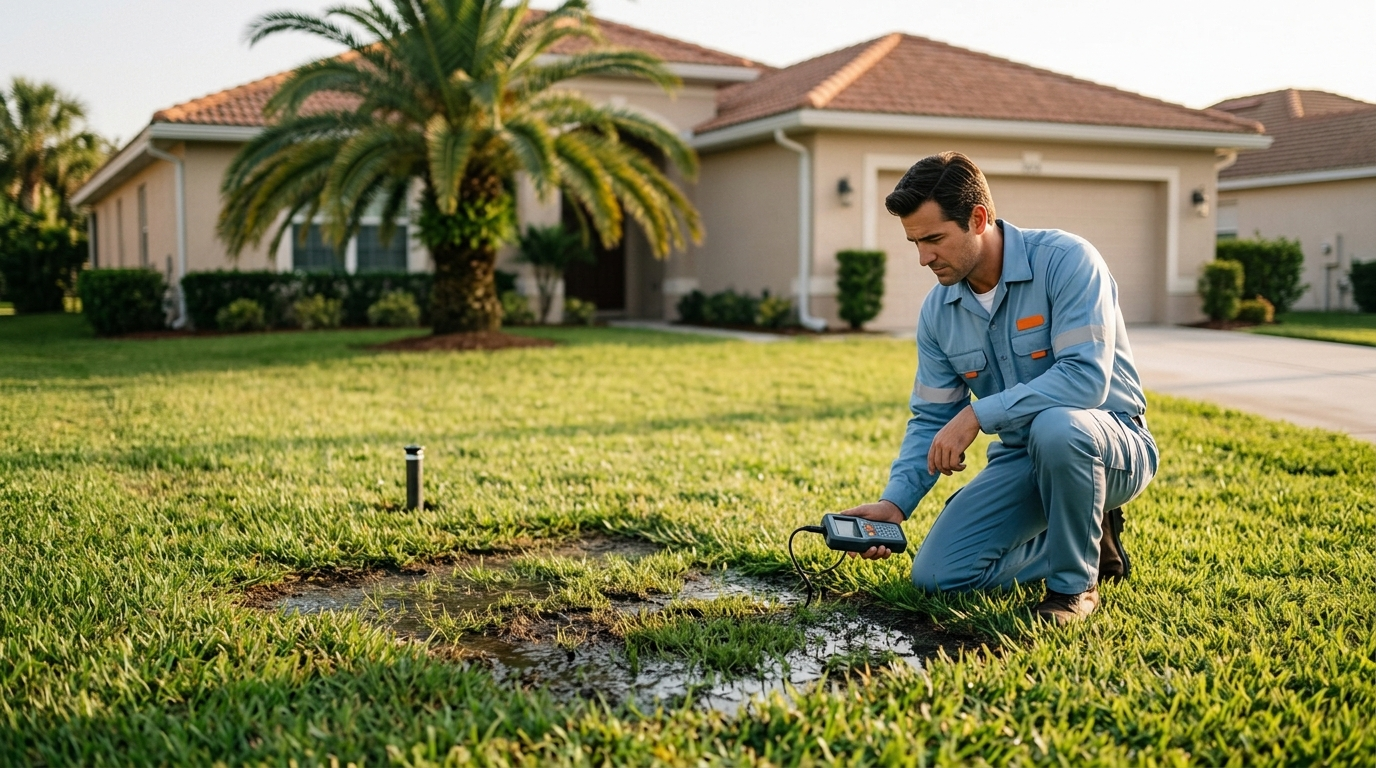
A soggy patch of lawn is easy to ignore, but water that keeps escaping underground can waste water, raise your bill, and soften the soil around your home. The good news is that a few simple checks can usually tell you which kind of leak you are dealing with.
Rule out the easy explanations first
Not every wet patch is a leak. Before you worry, consider:
- Recent heavy rain or daily storms, which are common in Fort Myers during the rainy season
- Low spots where water collects after watering
- Condensation draining from your air conditioner, which often empties near the outdoor unit
- A hose bib or outdoor spigot that drips
If the spot dries out within a day or two of dry weather, it is probably not a leak.
Irrigation leak: what it usually looks like
- Wetness appears, or gets worse, only when the sprinklers run
- A cracked or broken sprinkler head, or water shooting up in one zone
- Weak spray or low pressure in a single zone
- Soggy ground that dries out after the system has been off for a day
Irrigation lines are shallow and made of lightweight pipe, so mowers, roots, and foot traffic can damage them easily. These leaks are common and are usually simpler to repair.
Main line leak: warning signs
The main line carries water from the meter to your house and stays under pressure all the time, so a leak here does not stop when the sprinklers are off. Watch for:
- A spot that stays wet or soggy even after irrigation has been off for days
- A patch of grass that is greener or growing faster than the rest of the lawn
- Soft, sinking, or eroded ground
- Lower water pressure inside the house
- A hissing or running-water sound near the meter or along the pipe route
- A water bill that jumps with no change in your habits (see our guide to a high water bill in Fort Myers)
A simple way to tell which one it is
- Turn off the irrigation system at the controller, and at its shutoff valve if you have one.
- Watch the wet spot for 24 hours. If it dries out, the sprinkler system was the likely source. If it stays wet, keep going.
- Run the meter test. Turn off all water inside the house, note the meter reading or leak indicator, wait 30 to 60 minutes, and check again. Our guide to slab leak vs plumbing leak explains it in detail.
- Read the result. If the meter moves while irrigation and indoor water are off, water is leaking somewhere between the meter and your fixtures, which may be the main line.
- Take notes and photos. Record where the spot is, how large it is, and when you first noticed it.
Before anyone digs, call 811 so underground utilities are marked.
Who to call
A broken sprinkler head or a leaking irrigation zone can usually be fixed by you or an irrigation contractor. If the spot stays wet with irrigation off, or the meter keeps moving, the leak may be underground and hard to locate by eye. Underground leak detection can help pinpoint the location so repairs are targeted instead of digging up the whole yard. If you see water gushing or flooding, shut off the main valve at the meter or the house first. Wondering about coverage? Read our guide on whether Florida homeowners insurance covers leak detection.
Frequently asked questions
Can a main line leak be directly under the wet spot?
Not always. Water can travel underground before it reaches the surface, so the wet spot may not sit directly above the leak.
How do I know if my sprinkler system is leaking?
Run each zone one at a time and look for broken heads, geysers of water, weak spray, or soggy ground that appears only while a zone is running.
Is a leaking main line an emergency?
Not always, but it wastes water around the clock. If water is flooding, shut off the main valve and arrange an inspection as soon as you can.
Should I dig up the wet spot myself?
It is best not to. Call 811 before any digging, and locate the leak first so you do not dig in the wrong place.