Toilet Running Silently: How to Do a Dye Test
A toilet running silently is one of the most common hidden causes of a high water bill, and the toilet dye test is the quickest way to check. It takes about 15 minutes, costs almost nothing, and tells you whether the problem is your toilet or something else in the house.
What is a silent toilet leak?
It is water slipping from the tank into the bowl without a loud, obvious run. Because it makes little noise, it can go on for weeks, and a badly leaking toilet can waste a lot of water, sometimes hundreds of gallons in a day.
- A faint trickle or hiss after the toilet has been flushed
- The tank refilling on its own every so often, sometimes called “ghost flushing”
- A water bill that rises with no change in habits
- A water meter that keeps moving when everything is off
A typical scenario: a household's bill climbs for a few months, and the cause turns out to be the guest bathroom toilet that nobody notices because it is rarely used.
How do I do a toilet dye test?
Add dye to the tank, wait without flushing, and look at the bowl. Here is the full process:
- Do not flush for at least an hour before you start, so the water is still.
- Lift off the tank lid and set it somewhere safe.
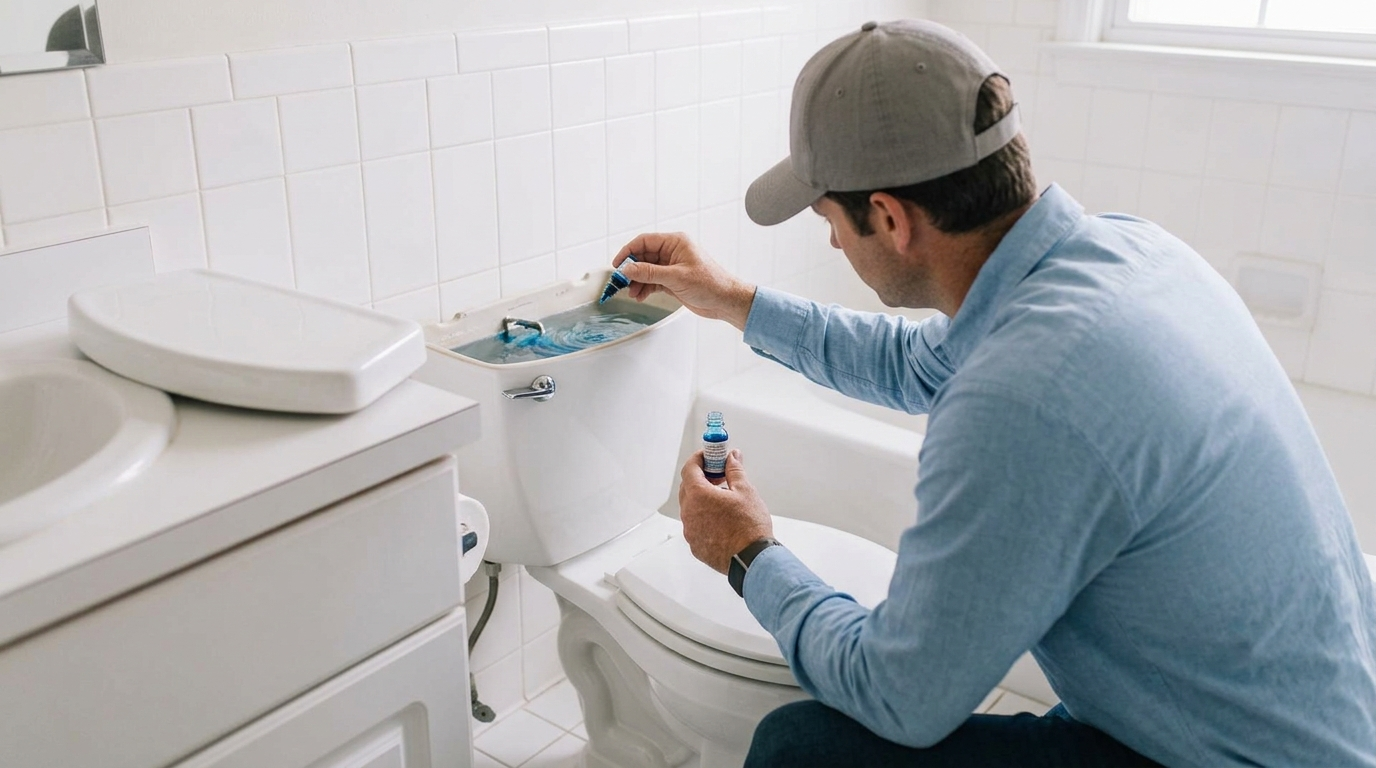
- Add about 10 drops of food coloring to the tank. A dark color like blue or red shows best. A dye tablet from a hardware store also works.
- Replace the lid and wait 10 to 15 minutes. Do not flush and do not use the toilet.
- Look in the bowl. If any color has appeared, water is leaking from the tank.
- Flush two or three times to clear the dye, then repeat on every toilet in the house.
Practical tip: for a very slow leak, add the dye before bed and check the bowl in the morning, as long as nobody flushes overnight. If your toilet is pressure-assisted or has a sealed tank, ask a plumber, because the test works differently.
What do the results mean?
Color in the bowl means the toilet is leaking. No color means the toilet is probably fine, though it is worth checking the water level and fill valve.
| Result | Likely cause | Next step |
|---|---|---|
| Color appears in the bowl | Worn, warped, or dirty flapper, or a poor seal | Replace the flapper and test again |
| No color, but water keeps trickling into the overflow tube | Water level set too high, or a fill valve problem | Adjust the level or replace the fill valve |
| No color and the tank behaves normally, but the meter still moves | Leak elsewhere in the house or yard | Run the meter test and consider leak detection |
How do I find out which toilet is leaking?
Close each toilet's small shutoff valve, one at a time, and watch the meter. If the meter stops moving, you have found the leaker. This works even if the dye is hard to see.
- Confirm the meter moves with all water use off (see our guide to slab leak vs plumbing leak for the meter test).
- Turn the small valve behind one toilet clockwise to close it.
- Wait 15 to 30 minutes and check the meter or leak indicator.
- If the meter stopped, that toilet is the source. If not, reopen the valve and try the next toilet.
Can I fix a leaking flapper myself?
Usually yes. A worn flapper is one of the most common toilet repairs, and the part is a standard hardware store item.
- Close the shutoff valve behind the toilet and flush to drain the tank.
- Unhook the old flapper from its pegs and the chain.
- Match the new flapper to your toilet model. Take the old one to the store to compare.
- Attach the chain with only a little slack, so it does not hold the flapper open.
- Reopen the valve, let the tank fill, and repeat the dye test.
Call a plumber if the tank is cracked, the shutoff valve drips, or water appears around the base of the toilet, since those are different problems. Older homes may also have worn supply hoses and valves, which we cover in older homes in Fort Myers: common pipe problems.
What if every toilet passes but my bill stays high?
Then the leak is probably somewhere you cannot see, such as an irrigation line, a pipe in a wall, or a line under the slab. Our guide to a high water bill in Fort Myers walks through the next checks.
If the meter keeps moving after you have ruled out the toilets, that is the point to get the leak located instead of guessing. Learn how hidden water leak detection works, or see plumbing leak detection for suspected leaks inside the home.
Frequently asked questions
How long should I leave dye in the toilet tank?
10 to 15 minutes is enough for most leaks. For a very slow leak, add the dye before bed and check the bowl in the morning without flushing.
What color dye works best?
Food coloring in a dark color such as blue or red shows up clearly in a white bowl. Dye tablets from a hardware store also work.
Can a silent toilet leak raise my water bill?
Yes. Water slips from the tank into the bowl around the clock, so even a small leak adds up over a billing cycle.
Why does my toilet refill by itself?
A worn flapper lets water slowly drain from the tank, so the fill valve turns on now and then to top it off.
Is the dye test safe for my toilet?
Yes. Food coloring is harmless in a toilet tank. Flush a couple of times afterward to clear the color.
What if my toilet passes the dye test but the meter still moves?
The leak is likely elsewhere, such as an irrigation line, a pipe in a wall, or a line under the slab. Run the meter test and consider leak detection.
Do I need a plumber for a leaking flapper?
Not usually. Replacing a flapper is a common do-it-yourself job. Call a plumber if the problem is a cracked tank, a leaking supply valve, or water around the base.