Leak Detection for Restaurants and Retail Shops in Fort Myers
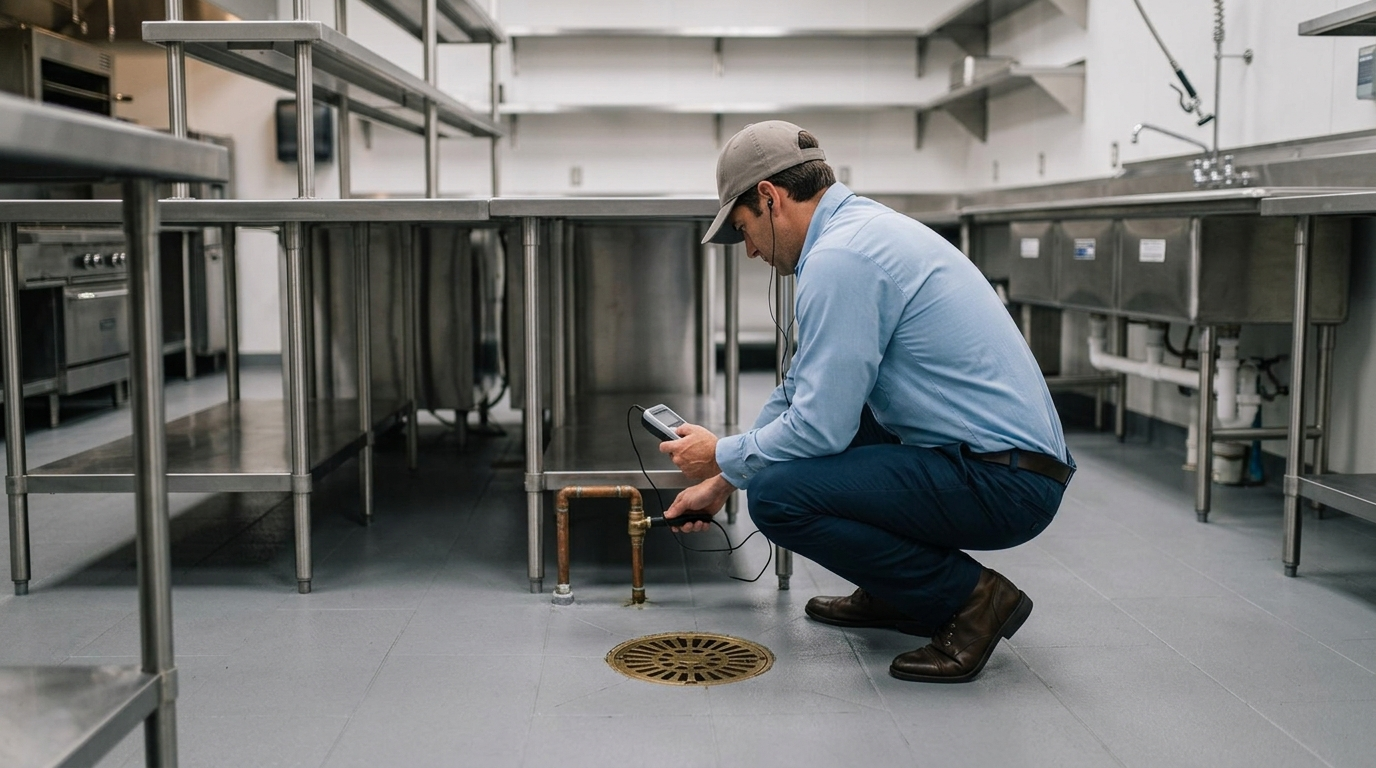
Leak detection for restaurants and retail shops in Fort Myers works differently from a home visit, because every hour of downtime costs you sales. A hidden leak in a kitchen, a restroom, or a shared wall can run for weeks before anyone notices, so the goal is to find it quickly and with as little disruption as possible.
Why is leak detection different for a business?
Because you cannot close for a week. Testing usually has to fit around your hours, and the building may be shared with other tenants.
- Downtime matters. Ask for testing before opening or after closing.
- Equipment runs constantly. Ice machines, dish machines, water filters, and soda systems all use water, which can hide a leak or look like one.
- Walls and lines may be shared. In a strip center, a leak can start in the next unit or in a line the landlord owns.
- Wet floors are a safety issue. They are a slip risk for staff and customers, and standing water can raise sanitation concerns.
Where do hidden leaks usually start?
In restaurants, usually near equipment and drains. In retail, usually in restrooms, ceilings, and shared walls.
| Business | Common leak spots | What you may notice |
|---|---|---|
| Restaurant kitchen | Dish pit and pre-rinse lines, ice machine and beverage lines, hand sinks, water heater | Wet floor near equipment, higher bill |
| Restaurant floor and slab | Supply lines under the kitchen slab, area around floor drains | Floor that stays damp in one spot, warm patch |
| Retail shop | Restroom fixtures and flush valves, mop sink, air conditioner condensate line | Stained ceiling tile, musty smell, running-water sound |
| Strip center or shared building | Shared walls, underground service line, common irrigation | Neighbor reports, wet ground, meter moving after hours |
Fire sprinkler lines are a separate system handled by licensed fire protection contractors. If you suspect a leak there, call one rather than a plumbing leak provider.
What warning signs should a business owner not ignore?
A water bill that rises while your sales and hours stay the same is the most common early clue.
- A meter that keeps moving after closing
- Damp floors, slick patches, or a musty smell in the back of house or storage
- Stained or sagging ceiling tiles
- Low pressure at sinks, or a toilet that runs on its own
- Peeling paint or swollen baseboards along a wall
Practical tip: write down your meter reading every Monday before opening for a month. A steady climb that does not match busier weeks is worth investigating. See our guide to a high water bill in Fort Myers for how to read the numbers.
A typical scenario: a shop's water bill climbs over several months while sales stay flat. The owner assumes rates went up, but the meter keeps moving after closing, which points to a leak somewhere in the building.
How do I run a quick closing-time meter test?
After closing, turn off everything that uses water, photograph the meter, wait 30 to 60 minutes, and check again. Any movement suggests a leak.
- Turn off or isolate dish machines, ice machines, water softeners or filters, and any irrigation.
- Make sure no sink is running and no toilet is cycling.
- Photograph the meter reading or leak indicator.
- Wait 30 to 60 minutes, then check again.
Ice machines and softeners cycle on their own, so repeat the test or close their supply valves for a cleaner result. Our guide to slab leak vs plumbing leak explains the test in more detail.
What should I ask before booking commercial leak detection?
Ask how the provider will keep disruption low. A few good questions:
- Can testing happen before opening or after closing?
- Do you use non-invasive methods before anything is opened or cut?
- What written findings will I receive?
- Do you need access to the meter, mechanical room, or neighboring units?
- Is there a diagnostic fee, and what does it cover?
Learn more about commercial leak detection and hidden water leak detection. If a storm just passed, run the checks in our leak check after a hurricane guide too.
Is the tenant or the landlord responsible?
Your lease decides. Read it, then notify your landlord or property manager in writing as soon as you suspect a leak.
Many leases split responsibility by location: lines that serve only your space versus building or shared lines. Do not repair or cut into shared plumbing yourself. Keep photos, meter readings, and dates, and ask the landlord to confirm in writing who will arrange detection and repair. For your own coverage questions, check your commercial property policy, which can differ from the homeowners coverage discussed in our insurance guide.
Frequently asked questions
Can leak detection be done after business hours?
Often yes, but it depends on the provider and the building. Ask when booking so testing can happen before opening or after closing.
How do I know if a high water bill is a leak or just busy days?
Compare your bills with your sales and hours. If usage rises without more customers, or the meter moves after closing, suspect a leak.
Will leak detection shut my restaurant down?
Not necessarily. Many tests are non-invasive, but some areas may need temporary access or a water shutoff. Ask for a plan that limits downtime.
Who handles a leak in a shared wall or line?
Usually the landlord or property manager, depending on your lease. Notify them in writing and avoid repairing shared lines yourself.
Is a slow drain the same as a leak?
Not always. Slow drains are often clogs. But a persistently damp floor near a drain, along with a rising water bill, deserves a closer look.
Can a leak cause a health inspection problem?
It can. Standing water, mold growth, or loss of hot or cold running water may create sanitation issues. Fix leaks promptly and keep records of repairs.
Is a fire sprinkler line leak the same as a plumbing leak?
No. Fire sprinkler systems are separate and are handled by licensed fire protection contractors. Call one if you suspect a sprinkler line leak.