6 Slab Leak Mistakes Fort Myers Homeowners Make
A leak under your concrete floor rarely announces itself. It often starts with a higher water bill, a warm spot, or a faint sound of running water. Many Fort Myers homeowners miss these early signs, and that delay can lead to damaged floors, mold, and larger repairs.
The good news is that most slab leak mistakes are easy to avoid once you know what to watch for. In this article, you will learn six common mistakes homeowners make, why they make the problem worse, and what to do instead if you suspect a leak.
Why Slab Leaks Are Easy to Miss in Fort Myers Homes
What a Slab Leak Is and Where It Hides
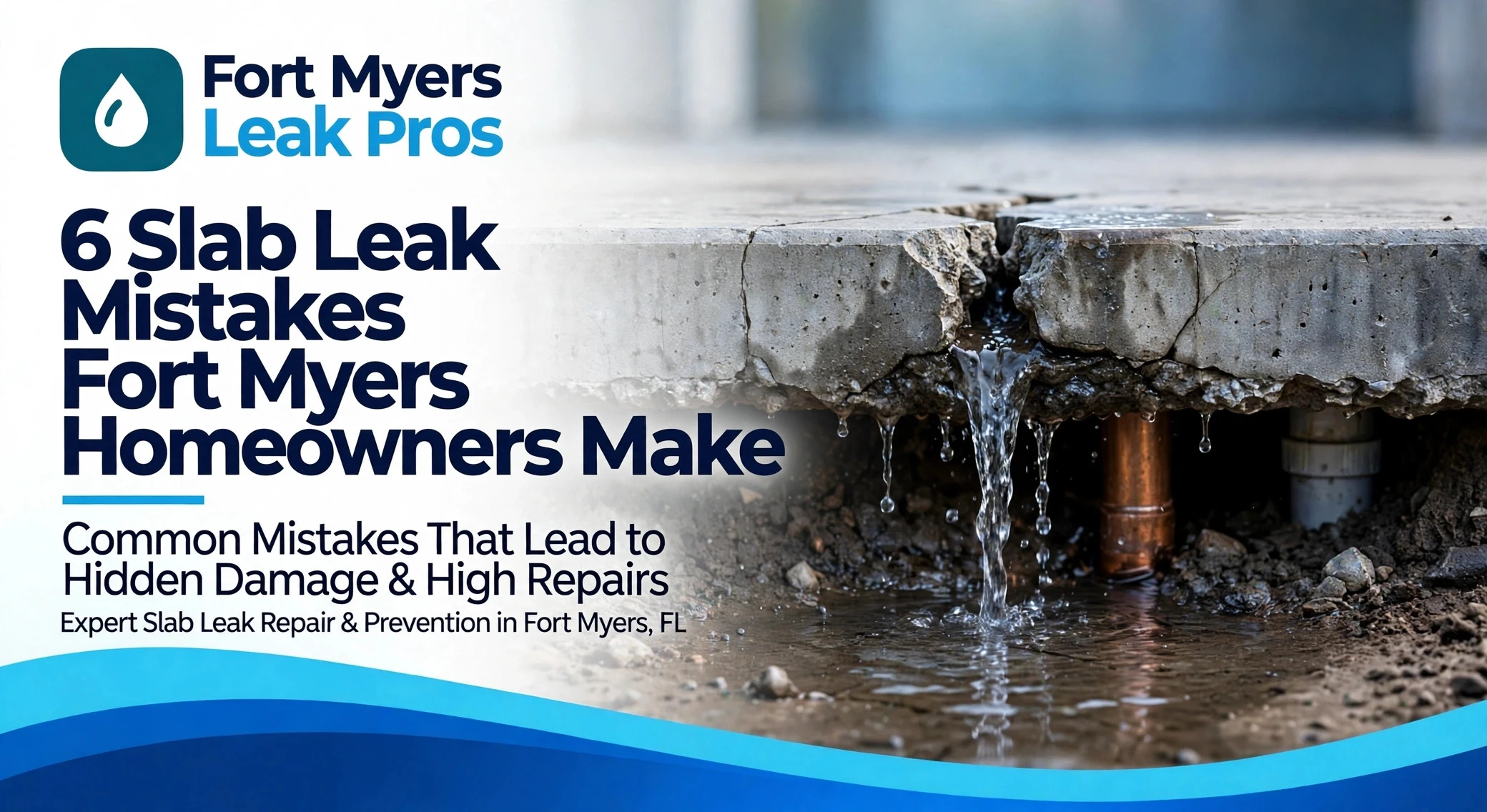
Many homes in Fort Myers are built on a concrete slab foundation, with water supply lines running underneath it. These under-slab pipes carry water to kitchens, bathrooms, and the water heater. When one of those lines leaks, the water does not always appear right above the break. It can spread under the concrete, soak into the soil, and show up in a different part of the house.
That is why signs of water leaking under the foundation can be confusing. You may notice a problem in one room while the leak itself is somewhere else. A plumbing inspection and proper leak detection are often needed to find the source, rather than guessing from the visible damage alone.
Why Early Signs Are Often Misread
Early slab leak warning signs tend to overlap with common household issues. A musty smell may be blamed on humidity. A damp patch may be blamed on a spill, mopping, or a pet. A warm spot on the floor may be blamed on sunlight. A small drop in water pressure may be blamed on a fixture.
A small leak can also go undetected for a long time if the water bill changes only a little at first and there is no visible damage. This does not mean the leak is harmless. It means the signs need a closer look before they are dismissed.
The 6 Slab Leak Mistakes That Make the Problem Worse
These mistakes do not mean you caused the leak. They are common responses that can delay the right fix and allow water damage, flooring damage, and mold growth to develop.
1. Ignoring a Sudden Rise in Your Water Bill
A high water bill with no explanation is one of the most useful early signs of a slab leak. If your usage has jumped but your household routine has not changed, do not assume it is only a billing error. Check for other signs as well, such as running water sounds, damp flooring, or a change in water pressure.
A bill increase on its own does not prove a slab leak, but it is a strong reason to run a water meter test and ask a licensed plumber for advice. Catching the issue at this stage can help limit how long water keeps leaking under the slab.
2. Blaming Damp Spots or Musty Smells on Humidity
Humidity is real in Florida, and it can make a home feel damp. The difference with a slab leak is often persistence and location. If one spot stays damp, returns after cleaning, or is paired with warped flooring, a musty smell, or mold you cannot trace, it deserves more attention.
Do not rely on air fresheners, fans, or dehumidifiers to hide a recurring smell or damp area. Those steps may make the room feel better for a while, but they do not stop water leakage under the floor.
3. Waiting Until Floors Crack or Lift
Cracks in floors and walls, lifting tiles, and warped wood are later warning signs. By the time they appear, leaking water may already have damaged flooring, affected the soil under the slab, and put added stress on the foundation.
Waiting for visible damage is one of the costliest mistakes, not because every leak becomes severe, but because early signs give you more options. If you notice several warning signs together, it is better to have the plumbing system checked than to wait for a crack to confirm the problem.
4. Covering the Damage Without Finding the Source
Replacing flooring, repainting a wall, or drying a damp area can feel like progress. If the leak is still active underneath, the damage is likely to return. New flooring can warp again. Paint can bubble again. A musty smell can come back.
Surface repairs make sense after the source has been found and fixed. Before that point, they can hide the clues a plumber needs to locate the leak and can make the repair harder to plan.
5. Approving Floor Removal Before Non-Invasive Slab Leak Detection
It is understandable to want the leak fixed fast, but breaking concrete before the location is known can create a larger opening than needed and still miss the exact source. Modern slab leak detection in Fort Myers without breaking floors is designed to narrow the location first.
A licensed plumber may use pressure testing, acoustic listening equipment, thermal imaging, and line tracing to check hot water lines and cold water lines and pinpoint the problem area. That information helps decide whether a small access point is possible, whether a water line can be rerouted in some cases, and what repair work is actually needed. Ask how the leak was located before you agree to demolition.
6. Skipping Documentation and a Post-Repair Check
Once the repair is done, it is easy to move on and forget the details. That can cause problems later if the issue returns or if you need to speak with your insurance company. Keep photos of the damage, notes on when signs first appeared, water meter readings if you have them, and copies of reports and receipts.
After a repair, keep watching for the same signs for a while. A bill that rises again, a new damp spot, a return of musty odor, or another drop in water pressure should prompt a recheck, not another long wait.
What to Do Instead If You Suspect a Slab Leak
Simple Checks You Can Do Without Damaging Your Floors
You do not need to open a floor to get useful information. These checks can help you decide whether to call for help sooner:
- Turn off all faucets, toilets, washing machines, dishwashers, and the irrigation system, then watch the water meter. If the meter keeps moving, water may still be flowing somewhere in the plumbing system.
- Note any warm spots on the floor, especially if they were not there before.
- Listen for running water when no fixtures are on.
- Note any sudden drop in water pressure and whether it affects the whole home or one area.
If water is spreading quickly, pressure has dropped sharply, or you see active pooling, turn off the main water valve if you know where it is and can do so safely, then contact a licensed plumber or emergency plumbing team promptly.
What to Share When You Call for Slab Leak Detection in Fort Myers
Clear details help a leak detection and repair service plan the visit. Share when the signs started, whether your water bill changed, where you noticed warm, damp, or warped flooring, whether you hear running water, and whether hot water, cold water, or both seem affected. A hot side vs. cold side check can help narrow whether the leak is on a hot water line or a cold water line.
Also mention any previous plumbing work, flooring changes, or earlier leaks in the home. That history can help the plumber understand pipe corrosion, pipe abrasion, or other wear in the system.
Questions to Ask Before Slab Leak Repair Begins
Before work starts, ask:
- How was the leak located, and what detection equipment was used?
- Where is the leak, and how certain is that location?
- What repair options are available, and can the leak be repaired without digging up a large section of floor?
- What part of the floor, if any, will need to be opened?
- What should I monitor after the repair?
A clear explanation does not guarantee a simple fix, but it helps you avoid rushed decisions and understand what the repair will involve.
If You Rent or Manage a Property in Fort Myers
What Renters Should Report and Record Right Away
Renters should not wait to see if a suspected slab leak gets better on its own. Report it to the landlord or property manager in writing as soon as you notice signs such as a rising bill, damp flooring, a warm spot, running water sounds, or a musty smell. Include the date, photos if possible, and a short description of what changed.
Do not attempt under-slab repairs yourself, and do not cover the damage in a way that hides it. If water is spreading, follow any emergency instructions from your landlord or manager and turn off the main water valve only if you know how and it is safe to do so.
What Property Managers Should Do to Protect the Property and Tenants
Property managers should treat a slab leak report as time sensitive. Arrange for a licensed plumber to carry out leak detection, keep a record of reports, inspections, and repairs, and communicate the next steps to both the tenant and the owner. Replacing flooring without locating the leak can waste money and leave tenants dealing with the same problem again.
Between tenants, it is also worth checking for warning signs such as unexplained bill changes, damp or warped flooring, musty odors, and cracks near floors or baseboards. Early action protects the property and helps avoid disputes about when the damage started.
How to Lower the Chance of a Repeat Slab Leak
Signs to Watch After a Repair
After a repair, your normal routine is the best early warning system. Watch your water bill for unexplained changes, pay attention to water pressure, and check for returning damp spots, warm areas, or musty smells. If flooring was replaced, watch for warping or lifting in the same area.
You do not need to check every day, but staying alert to changes makes it easier to act early if another leak develops in a different part of the plumbing system.
When to Ask for a Recheck Instead of Waiting
Ask for a recheck if signs return after a repair, if a new area shows dampness or warmth, or if your bill rises again without a clear reason. Bring your previous report and notes so the plumber can compare the old location with the new signs.
A repeat problem does not always mean the first repair failed. It can be a separate leak in aging pipes or another section of the water line. The key mistake to avoid is the same one that caused trouble the first time: waiting until the damage is visible before getting it checked.
A slab leak does not have to become a major project. The difference is often timing. Notice the early signs, avoid covering or delaying the problem, get the leak located before major work begins, and keep simple records after the repair.
FAQ
How common is a slab leak?
They are a known problem in homes with water lines under a concrete slab, and the risk tends to rise as pipes age.
Is it expensive to fix a slab leak?
The cost varies with the leak location, repair method, and any floor or water damage. Early detection usually keeps the job simpler than a leak found after major damage.
Do plumbers fix slab leaks?
Yes, licensed plumbers detect and repair slab leaks, often using non-invasive tools to locate the leak before opening the floor.
What can I do if a pipe is leaking under my concrete floor?
Turn off the main water valve if water is spreading, avoid digging into the floor yourself, and call a licensed plumber for slab leak detection.
How long do slab leaks take to fix?
It depends on the leak location, repair method, and damage. A straightforward repair may take a day, while a more complex job can take longer.