When to Call for Emergency Slab Leak Detection in Fort Myers (and When It Can Wait)
Water under your slab does not wait for a convenient time. It can spread quietly, damage floors, and leave you unsure whether to call now or wait until morning.
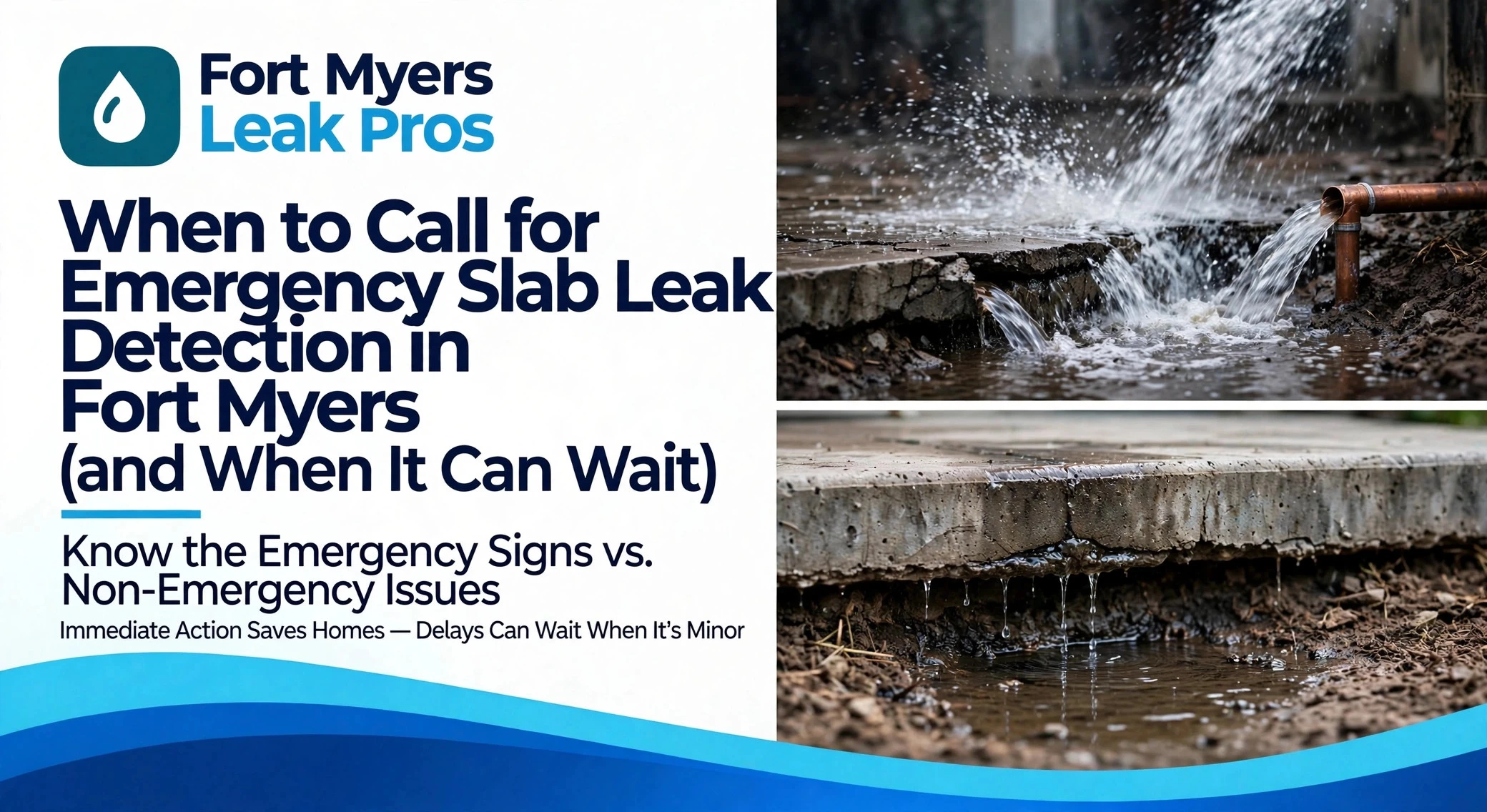
This guide will help you decide when emergency slab leak detection in Fort Myers is needed right away, and when a scheduled visit is enough. You will learn the urgent signs, a quick check you can do in minutes, and safe steps to take while you wait.
Call (239) 232-8232 now. Service is available 24/7.
Call Now: Signs That Should Not Wait Until Morning
Call for emergency leak detection right away if you see any of these signs, especially if they are getting worse quickly.
- Active water flowing with no visible source, on floors, walls, or ceilings
- Flooding from an unknown source, when you cannot tell where the water is coming from
- Water near electrical panels or wiring, which is an electrical hazard and needs immediate source identification
- Water meter spinning with all fixtures off, which points to an active leak somewhere in your system
- A burst pipe, or a sudden break that is sending water into the home
- Hot spots on floors combined with spreading dampness or a fast rise in moisture
- Sound of running water when nothing is on, together with visible water or a rapidly spreading damp area
- Sewage odor from drains or beneath the property, which may point to a sewer line break and contamination risk
If water is spreading, if it is near electricity, or if you cannot stop it, do not wait to see what happens overnight. Turn off the main water valve if you can do so safely, and call for help.
Signs That Can Usually Wait for a Scheduled Visit
Not every slab leak sign is an emergency. Some signs can usually wait for a scheduled visit, as long as you monitor them and book that visit soon, rather than ignoring them.
A sudden spike in water bill on its own, without active water, flooding, or electrical risk, is a strong reason to book detection promptly, but it does not always mean you must call in the middle of the night. A faint musty smell, a small area of grout discoloration, or a damp spot that is stable and not spreading can also usually wait for a scheduled inspection, if there is no active flow and no sewage involved.
A single warm spot on a floor, without spreading water or a fast meter change, can also often wait for a scheduled check, especially if you note when it appeared and whether it changes after water use. The key word is usually. Waiting means days, not weeks, and it means watching for change. If the spot spreads, if water appears, if the meter starts moving fast, or if a sewage smell develops, the situation has changed and should be treated as urgent.
How to Decide in 5 Minutes: A Quick Emergency Check
Use this check in order. It will not replace professional detection, but it will help you decide whether to call now or schedule a visit.
- Look for active water. Is water flowing, pooling, or spreading right now, or is the area only damp?
- Check for electrical risk. Is water near electrical panels, wiring, or outlets? If yes, stay clear of that area and call now.
- Turn off all faucets, toilets, washing machines, dishwashers, and irrigation, then watch the water meter. If the meter is spinning fast, that points to an active leak.
- Check for spread. Is the damp area getting larger, are ceilings or walls getting wet, or are floors becoming soft?
- Check for sewage signs. Is there a sewage odor, are multiple drains backing up, or is waste involved? If yes, limit use of drains and call now.
If you answer yes to active water, electrical risk, fast meter movement, rapid spread, or sewage involvement, call now. If none of those are present, and the signs are stable, book a scheduled detection visit promptly and keep monitoring in the meantime.
Safe Steps to Take Before Help Arrives
Before a technician arrives, you can take steps to limit damage without trying to find the leak yourself. These steps help protect your home and make detection easier.
Shut off the main water valve if the leak is from a supply line and you can reach the valve safely. Your main shutoff is typically near your water meter or where the main line enters your home. This stops the flow immediately. If you shut off the main valve, turn off the water heater as well, to prevent the heating element from running without water.
Move valuables away from the affected area, including furniture, electronics, documents, and personal items. Place towels or containers to catch active drips and prevent water from spreading to dry areas. Document the damage with photos and video for your insurance claim, including the affected floors, walls, ceilings, and any visible moisture.
Do not break through walls or floors to find the leak. That can cause additional damage, disturb drywall, subfloors, and insulation unnecessarily, and make detection more difficult. Note instead when the signs started, what changed, and what your meter showed. That information helps the technician start in the right place.
What an Emergency Visit Usually Covers
An emergency visit is focused on finding the leak, not on rushing into a large repair on the spot. Knowing what it usually covers can reduce stress when you call.
It usually starts with a phone consultation. You will be asked what you are seeing, whether water is active, whether the meter is moving, and whether there is any electrical or sewage risk. That information helps decide how urgent the visit is and what equipment may be needed.
On site, detection usually involves testing and inspection to locate the source as accurately as possible. A thermal camera and thermal imaging can help trace moisture and warm areas, especially for a hot water line leak under a foundation slab. Other methods may be used to check supply lines, including pressure and listening checks, depending on the signs. The goal is to pinpoint the under-slab area before any concrete is opened.
After detection, you should receive a clear explanation of what was found, where the leak is, and what needs to happen next. A professional detection report, with photos and thermal images where available, is useful for repair planning and for an insurance claim. That report does not by itself mean repair must start immediately, and it gives you a record to review before you agree to work.
Why Fort Myers Homes Can Deteriorate Faster When a Leak Runs
Fort Myers homes face a combination that can make a running leak worse more quickly than in a cooler, drier climate. Warm, humid air helps mold growth when moisture stays in drywall, subfloors, and insulation. Water that saturates those materials does not dry quickly on its own, especially under tile or inside walls.
Many Fort Myers homes are also built on a foundation slab, so a leak in a supply line under the slab can spread moisture through concrete and bedding before it shows clearly on the surface. A pinhole leak in a copper pipe, for example, may not look dramatic at first, but it can keep feeding moisture into the same area hour after hour.
That does not mean every leak becomes a major restoration project. It means time matters more here than in a dry climate, because moisture, humidity, and hidden spread work together. Early detection limits how long water stays in those materials, and that is the main reason an active leak should not be left to run while you wait for a convenient time.
What Delay Can Risk, and What It Cannot Prove
The cost of waiting is not only about money. It is about how far water, moisture, and contamination can spread while a leak continues. What starts as a drip can saturate drywall, subfloors, and insulation. Over time, that saturation can lead to mold growth, structural damage from water, electrical hazards if water reaches wiring, and widespread contamination if a sewer line is involved. A small, targeted repair can then become a larger restoration project.
Delay alone, however, cannot prove how bad the damage already is. It cannot prove that mold is present, that a foundation has moved, or that a specific repair will be needed. Only inspection and detection can show that. That distinction matters, because it prevents two mistakes: assuming a leak is harmless because it looks small, and assuming the worst because it has been running for a while.
Professional detection is usually less disruptive than the damage caused by waiting, because it aims to locate the leak before large areas are opened. It does not guarantee a simple fix, and it does not guarantee what an insurer will cover. It gives you a located source, a report, and a clearer basis for the next decision.
After Detection: Next Steps Without Rushing Into Repair
After detection, take time to review what was found before agreeing to major work. Read the detection report, look at the photos and thermal images, and ask where the leak is located and how certain that location is. Ask what repair options exist, what each option would involve, and what would need to be opened.
If the suggested work is large, such as opening a slab or replacing a long section of pipe, it is reasonable to ask for time to consider it, unless there is an immediate safety risk such as active flooding or water near electricity. In that case, stopping the water source comes first, and repair planning can follow.
Keep your documentation together, including photos, meter notes, the detection report, and any receipts. That record helps with repair planning and with an insurance claim, and it helps if signs return after repair. Monitor the area after work is done, including the bill, the meter, and any dampness or odor, and ask for a recheck if signs return.
The main takeaway is simple. Call now for active water, flooding, electrical risk, fast meter movement, or sewage involvement. Schedule promptly for stable signs without those risks, monitor them closely, and do not break into floors or walls to find the leak yourself.
FAQs
How long can a slab leak go undetected?
It can go undetected for a long time, especially if the leak is small and hidden under a concrete slab. It often becomes noticeable only when the water bill rises, a warm spot appears, or flooring starts to change.
How much does it cost to detect a slab leak?
The cost varies with the home size, leak location, and detection methods used. Ask for a clear explanation of what is included before work starts, rather than relying on a single quoted price.
What to do if you can't locate a slab leak for water?
Do not break into floors or walls to find it yourself, as that can cause more damage. Turn off the main water valve if water is spreading, and call a licensed plumber for professional slab leak detection.
Should I call insurance for a slab leak?
It is usually worth calling your insurer early to ask what your policy covers, especially for resulting water damage. Document the damage with photos and keep the detection report, as coverage often depends on the policy and the cause.